|  |
|

| Missing In Action (MIA) | Prisoners Of War (POW) | Unexploded Ordnance (UXO) |
| Chronology | Locations | Aircraft | Ships | Submit Info | How You Can Help | Donate |
|
| USAAF 5th AF 19th BG 40th RS Former Assignments 88th RS 19th BG 93rd BS   Hustad July 1942   Brian Bennett 1988  |  Justin Taylan 2003 |
Pilot Captain Harl Pease, Jr., O-34206 11th BG, 93rd BS (POW, executed Oct 8, 1942, MIA, BNR) Plymouth, NH Co-Pilot F/Sgt Frederick Wentworth Earp, 403325, RAAF, attached 93rd BS (MIA / KIA, BR) Penrith, NSW Bombardier 1st Lt. Robert B. Burleson, O-412726 (MIA / KIA, BNR) Hamilton, AL Engineer S/Sgt Rex E. Matson, 6657964 (MIA / KIA, BNR) Marengo, IA Radio Sgt Alvar A. Liimatainen, 160292712 (MIA / KIA, BR) Marquette County, MI Navigator 2nd Lt. Richard M. Wood, O-433161 (MIA / KIA, BNR) Glenpool, OK Gunner Sgt David W. Brown, 6296430 (MIA / KIA, BR, BNR) Red River County, TX Gunner Sgt Chester M. Czechowski, 6915712 (POW, executed Oct 8, 1942, MIA, BNR) Chicago, IL Crew Sgt Fred W. Oettel, 19048522 (MIA / KIA, BNR) New York, NY Crashed August 7, 1942 MACR 16020 Aircraft History Built by Boeing at Seattle. Constructors Number 2429. On November 29, 1941 delivered to the U.S. Army Air Force (USAAF) as B-17E Flying Fortress serial number 41-2429 at Boeing Field and flown away by Lt. John E. Dougherty. By late November 1941 assigned to the 88th Reconnaissance Squadron (88th RS) at Fort Douglas Airfield. No known nickname or nose art. Wartime History On December 6, 1941 took off from Hamilton Field piloted by Major Richard H. Carmichael leading an ferry flight bound for Hickam Field. This bomber had the .50 caliber machine guns installed but carried no ammunition. Aboard was "Crew No. 1" including co-pilot Captain James W. Twaddell, 2nd Lt Donald O. Tower, 2nd Lt Kermit E. Meyers, Aviation Cadet Theodore I. Pascoe, TSgt Wallace A. Carter, SSgt Jack R. Tribble, SSgt Sam Tower and SSgt Harold D. Boyer. On December 7, 1941 in the morning, incoming Japanese aircraft detected on radar were dismissed as the expected flight of B-17s. The formation of B-17s arrived during the Japanese surprise attack on Pearl Harbor and Oahu. Reaching Diamond Head, the B-17 observed unidentified aircraft, anti-aircraft fire and smoke and diverted to Bellows Field but also found it under attack and instead landed at Haleiwa Field where it was armed and refueled. While the ground, an A6M2 Zero strafed the airfield, but did not damage this bomber. After the attack, flown to Hickam Field. During December 1941, operated from Hickam Field flying reconnaissance missions off Hawaii. This B-17 was painted in the Hawaiian Air Depot (HAD) three color camouflage scheme consisting of dark green, olive drab and tan upper surfaces with standard gray lower surfaces. Afterwards, flown across the Pacific to Australia. Assigned to the 19th Bombardment Group (19th BG), 93rd Bombardment Squadron (93rd BS). Later, assigned to the 40th Reconnaissance Squadron (40th RS). While operating in Queensland, nicknamed "Why Don't We Do This More Often". On March 16, 1942 took off from Garbutt Field at Townsville piloted by Captain William Lewis with B-17E "San Antonio Rose II" 41-2447 on a flight to Batchelor Field near Darwin as one of four B-17s to stage for a mission evacuate General Douglas MacArthur from Del Monte Airfield on Mindanao. Originally, B-17E 41-2434 was selected for MacArthur but when the engines were unable to start and did not participate. On August 6, 1942 this bomber was at Mareeba Airfield. During the evening, Captain Harl Pease and his crew landed B-17E 41-2668 at Mareeba Airfield after having experienced an engine valve failure. On the ground, they boarded this bomber and took off from Mareeba Airfield and flew to 7 Mile Drome near Port Moresby arriving on August 7, 1942 at 1:00am to stage for the bombing mission scheduled against Rabaul to support of the American landings at Tulagi and Guadalcanal in the Solomon Islands. Exhausted, the crew rested for a few hours while Pease sought permission to fly the big mission. This bomber was deemed to have weak engines and had aborted several previous missions. The bomb bay fuel tank was only a metal tank without a protective self-sealing liner. Regardless, Pease insisted on flying the mission and was allowed by Major Hardison C.O. of the 93rd BS who wanted every available bomber. Mission History On August 7, 1942 around 7:30am took off from 7 Mile Drome near Port Moresby piloted by Captain Harl Pease, Jr. as one of thirteen B-17s on a bombing mission against Vunakanau Airfield near Rabaul. Aboard was Royal Australian Air Force (RAAF) co-pilot F/Sgt Frederick Wentworth Earp, attached to the 93rd BS. Inbound, this B-17 flew at the edge of the formation of three plane flights at 22,000' flying on the wing of B-17E "Tojo's Jinx" 41-2462 piloted by Captain Edward M. Jacquet. After reaching their initial point, the bombers turned to begin the bomb run against Vunakanau Airfield. Several minutes later, intercepted by fifteen A6M3 Model 32 Zeros from 2nd Kōkūtai (2nd Air Group) led by Lt. Yoshio Kurakane plus eleven A6M Zeros from Tainain Kōkūtai (Tainan Air Group) led by Johji Yamashita. The Japanese made frontal attacks then climbed away to making another pass while anti-aircraft guns fired on the B-17s as they bombed the runway and dispersal areas. Turning southward for the flight home, this B-17 was at the rear of the formation with an engine out over Vunakanau Airfield. As the damaged bomber fell behind the formation, it was targeted by the Zeros. This B-17 was last seen loosing altitude with both inboard engines on fire and descending. The bomb bay fuel tank was on fire and observed to drop out the bomb bay, possibly jettisoned by the crew. Captain Edward M. Jacquet recalls: "[This bomber was on the right wing of B-17E "Tojo's Jinx" 41-2462] We hollered and screamed for the formation to slow down to protect Harl [Pease]. We broke silence on our radios but of course they were very unreliable radios. Later the other pilots said they never heard us." None of the other B-17s observed this bomber to crash. When this B-17 failed to return it was declared Missing In Action (MIA). For their brave actions, Pease earned the Medal of Honor and the rest of the crew earned the Distinguished Service Cross (DSC), posthumously. In fact, this B-17 manage to fly roughly 45 miles to the south-southwest with Zeros in pursuit. Damaged by gunfire, the B-17 exploded before it crashed near the junction of the Powell River and Mavelo River (Henry Reid River) on Makurapau Plantation to the north of Wide Bay on the southern coast of New Britain. Before the crash, at least two or possibly three managed to bail out. The rest of the crew were either killed or incapacitated while still airborne or died on impact. Fates of the Crew At least two of the crew: Pease and Czechowski managed to bailed out. While descending in their parachutes, one or more of the Zeros fired at their parachutes and Pease was hit by a bullet in his lower leg. Both were quickly captured and became Prisoners Of War (POWs). The pair were transported to Rabaul arriving around August 10, 1942 and detained at the Keibitai Headquarters at Rabaul (Rabaul Navy POW Compound) by the 81st Naval Guard Unit. Pease requested medical treatment for his leg but received none but the wound gradually healed. Father O'Connell, a missionary interned at Rabaul who survived captivity saw both Pease and Czechowski alive. On October 8, 1942, a group of six POWs including Pease and Czechowski Massey, and King plus two Australian coastwatchers: Mason and Woodroffe and two natives were taken from captivity, presumably to work as laborers at one of the airfields. Later that afternoon, some of their clothing was returned to the prison and it was inferred the six were executed because they were never seen again. In fact, the six were taken near Tavurvur, blindfolded and led to the edge of a long pit dug by native laborers. Several Japanese Navy officers were present including Captain Mizusaki, Lt. Shiro Nakayama and Lt. Yoshimura plus an Imperial Japanese Army (IJA) medical officer who arrived by motorcycle with a sidecar. Several Japanese Navy personnel were instructed to bayonet them to death. At first, only one POW and two natives were killed, the other five POWs were wounded and fell to the ground in pain. Meanwhile, the medical officer wearing surgical gloves cut the jugular vein and removed an organ from his abdomen of two of the dying prisoners. After all the POWs were placed in the hole, Yoshimura stabbed each of them with bayonet in the throat. The medical doctor departed on the motorcycle holding a tray with the harvested organs. Postwar, this burial pit was never located and the six remain listed as Missing In Action (MIA). Wreckage Local villagers observed the bomber and trekked to where it crashed. Spotting dead bodies, they informed missionary Father Obereiter. Later, Japanese personnel likley visited the crash site and may have recovered intelligence material or salvaged parts. On March 25, 1946 this crash site was visited by a RAAF Searcher Team led by S/L Keith Rundle near the junction of the Powell River and Mavelo Rivers (Henry Reid River) on Makurapau Plantation, about seven miles west-northwest of Tol, far from where it was last observed. Inside the wreckage were the remains of two of the crew: the co-pilot and radio operator. The Australians identified the remains of F/Sgt Earp. The American authorities were informed about the other remains. On June 25, 1946 a team from American Graves Registration Service (AGRS) Operation One, Mission 3 visited Lamarien along the Powell River to visit an aircraft wreck the team believed was a "P-38 Lightning" [sic]. On June 26, 1946 the team was guided four hours inland to the crash site. They spent from 10:00am until no later than 4:00pm at the crash site (7 hour maximum). During their investigation, the crash site was broken into three sections and they deemed the plane to be a P-38 or B-25 [sic B-17). AGRS Operation One, Mission 3 investigate crashed P-38 [sic B-17], Missing Air Crew Report, page 3: "a. The crash site was broken into three distinct parts. The first was part of the fuselage most of which was in the river. The natives were positive that they had seen the remains of three men along side it. No trace, however, was found and it is thought that the remains were washed down the river. b. The second part of the plane consisted of one wing and the engine, 200 yards away from the river. c.. The third section consisting of the other wing and engine and part of the fuselage. Beneath the latter two complete remains were found together with several coins and a diamond ring, but no means of identification. Tooth charts were taken. During December 1948 a team from American Graves Registration Service (AGRS) again visited the crash site and interviewed a native name Nini who claimed “he had observed the plane falling and before it exploded he saw a parachute floating down.” He led the team to the site and a few bones were found along with a wallet and “a trinket with a crown on it.” Although no identification was made, the circumstances suggest another member of the crew might have bailed out before the crash. During 1986 a team from US Army CILHI led by Captain Woodard with Brian Bennett visited the crash site. Brian Bennett adds: "Our CILHI camp back in 1986. I remember that the wreckage was well scattered and was consistent with the aircraft having blown up in the air. From the lat / long position if you run a radius of about 500 meters then this will safely enclose the wreckage scatter of the B-17. This includes the area of interest of David Billings and his "Earhart Project". I was of the opinion years ago and still am that it is highly unlikely that the engine that David claims to be from Model 10 Electra that Amelia Earhart was flying is in fact one of the engines from B-17E 41-2429. We were on site for two weeks and did not find all the wreckage let alone all the engines. The rivers are the Powell River or Henry Reid River." During 1988, team from US Army CILHI led by Captain Woodard with Brian Bennett again visited the crash site. The fuselage door and a radio (with two 7.7mm bullet holes in it) was recovered from the crash site and donated to the Kokopo Museum where they are on display. During the late 1990s Australian David Billings visited the crash site and falsely claimed the crash site was Lockheed Model 10E Electra 1055 piloted by Amelia Earhart. His claims, promotion and fundraising efforts, spawned a myth that Earhart went down on New Britain Island in Papua New Guinea. This claim is false and incorrect. During 2012 or 2013 a Joint POW/MIA Accounting Command (JPAC) Investigation Team (IT) visited the crash site incorrectly believing the plane was an unidentified or new crash site. Recovery of Remains The remains of the seven that died in the crash were recovered by Father Obereiter and buried at Makurapau Plantation behind a kiln. The remains of two of the two crew recovered from inside the wreckage on March 25, 1946 were later identified as Australian F/Sgt Frederick Wentworth Earp and American Sgt Alvar A. Liimatainen. Possibly, the remains of the seven that died in the crash might have been recovered as unknowns (X-Files) and were later buried as unknown burials at Manila American Cemetery. Memorials The American crew were officially declared dead on different dates. Pease, Burleson, Wood, Oettel and Brown were officially declared dead on December 12, 1945. Matson and Czechowski were officially declared dead on December 13, 1945. Pease was officially declared dead on December 12, 1945 and remains listed as Missing In Action (MIA). He earned the Medal of Honor, posthumously, Distinguished Flying Cross (DFC) with Oak Leaf Cluster, Air Medal and Purple Heart, posthumously. He is memorialized at Manila American Cemetery on the tablets of the missing. He also has a memorial marker at Trinity Churchyard Cemetery in Holderness, NH. On September 7, 1957 Portsmouth Air Force Base (Portsmouth AFB) was renamed Pease Air Force Base (Pease AFB) in honor of Hal Pease. In 1991 when the base closed due to Base Realignment and Closure Commission a portion of the former base became Pease Air National Guard Base (Pease ANGB). Earp was officially declared dead the day of the mission on August 7, 1942. He earned the Distinguished Service Cross (DSC), posthumously. After his remains were recovered, he was buried at Bitapaka War Cemetery (Rabaul War Cemetery) at grave H. D. 5. Burleson was officially declared dead on December 13, 1945 and remains listed as Missing In Action (MIA). He earned the Distinguished Service Cross (DSC) and Purple Heart, posthumously. He is memorialized at Manila American Cemetery on the tablets of the missing. Matson was officially declared dead on December 12, 1945. He earned the Distinguished Service Cross (DSC), Silver Star, Air Medal and Purple Heart with Oak Leaf Cluster, posthumously. He also has a memorial marker at Methodist Cemetery in Ellettsville, IN. He is also memorialized on the Tippecanoe County War Memorial in Lafayette, IN. Liimatainen was officially declared dead the day of the mission on August 7, 1942. He earned the Distinguished Service Cross (DSC) and Purple Heart, posthumously. After his remains were recovered, he was buried at Park Cemetery in Marquette, MI. Wood was officially declared dead on December 12, 1945. He earned the Distinguished Service Cross (DSC) and Purple Heart, posthumously. He is memorialized at Manila American Cemetery on the tablets of the missing and remains listed as Missing In Action (MIA). Brown was officially declared dead on December 12, 1945. He earned the Distinguished Service Cross (DSC) and Purple Heart, posthumously. He is memorialized at Manila American Cemetery on the tablets of the missing and remains listed as Missing In Action (MIA). Brown also has a memorial marker at Childress Cemetery, Childress, TX. Czechowski was officially declared dead on December 12, 1945. He earned the Distinguished Service Cross (DSC) and Purple Heart, posthumously. He is memorialized at Manila American Cemetery on the tablets of the missing and remains listed as Missing In Action (MIA). Oettel was officially declared dead on December 12, 1945. He earned the Distinguished Service Cross (DSC) and Purple Heart, posthumously. He is memorialized at Manila American Cemetery on the tablets of the missing and remains listed as Missing In Action (MIA). References USAF Serial Number Search Results - B-17E Flying Fortress 41-2429 "2429 delivered Salt Lake SAD Nov 30, 1941. Assigned to 88th RS, 7th BG, then 7th BG, 88th RS. Arrived over Pearl Harbor on Dec 7, 1941. Used to evacuate MacArthur's staff from Del Monte, Philippines Mar 25, 1942 Shot down Rabaul, New Britain Aug 7, 1942. MACR 16020. Harl Pease received Medal of Honor for action." 7 December 1941 - The Air Force Story - Appendix D - B-17s Arriving During the Attack page 157 "B-17E 41-2429 / Crew No. 1: Capt Richard H. Carmichael, Capt James W. Twaddell, 2d Lt Donald O. Tower, 2d Lt Kermit E. Meyers, Avn Cdt Theodore I. Pascoe, TSgt Wallace A. Carter, SSgt Jack R. Tribble, SSgt Sam Tower, SSgt Harold D. Boyer." AWM Missing Air Crew Report 16020 (MACR 16020) created retroactively circa 1945-1946 NAA: Execution of Pease and seven other POWs (AWM 54 (1010/9/22) "Warrant Officer Yoshimura stated that he did not know the identities of the prisoners." AGRS Operation One, Mission 3 "Investigate crashed P-38 [sic], Missing Air Crew Report" page 1-4 [report relates to the crash site of B-17E Flying Fortress 41-2429, misidentified as a P-38 Lightning during the investigation] NAA Document "Fortress (41-2439) [sic]" NAA Earp Frederick Wentworth, SGT 403325, Casualty Repatriation (NAA: A703, 660/7/403325) NAA Earp Frederick Wentworth enlistment record (NAA: A9301, 403325) NAA Earp Frederick Wentworth Cemetery - Rabaul (Bita Paka) War Cemetery (NAA: A8231, 11/Earp Frederick Wentworth) RAAF Casualty Card - Fortress B-17E 41-2439 [sic] A typo exists that notes this bomber as serial number 41-2439. This incorrect serial has been occasionally reproduced. Crew member Czechowski is spelled "Chikowsky" [sic] and "Czechowske" [sic] in some records. Crew member Liimatainen is also listed as "Leomatinen" [sic] in some records. NARA Records of World War II Prisoners of War - Harl Pease Jr. last "Died as Prisoner of War" NARA "World War II Army Enlistment Records" - Fred W. Oettel NARA "World War II Army Enlistment Records" Alvar A. Liimatainen American Battle Monuments Commission (ABMC) - Harl Pease Jr. FindAGrave - Capt Harl Pease, Jr (photo, tablets of the missing photo) FindAGrave - Capt Harl Pease, Jr (photo memorial marker photo) CWGC - Frederik Wentworth Earp FindAGrave - Flight Sergeant Frederick Wentworth Earp (photo, grave photo) FindAGrave - FLT O Frederick Wentworth Earp (memorial marker photo) American Battle Monuments Commission (ABMC) - Robert B. Burleson FindAGrave - 1Lt Robert B Burleson (tablets of the missing) American Battle Monuments Commission (ABMC) - Rex E. Matson FindAGrave - SSgt Rex E Matson (tablets of the missing photo) FindAGrave - Sgt Rex E. Matson (memorial marker) FindAGrave - Alvar A. "Oliver" Liimatainen (photo, grave photo, DFC citation) American Battle Monuments Commission (ABMC) - Richard M. Wood FindAGrave - 1Lt Richard M Wood (tablets of the missing photo) American Battle Monuments Commission (ABMC) - David W. Brown FindAGrave - Sgt David Wayne Brown (tablets of the missing photo) FindAGrave - Sgt David Wayne Brown (memorial marker photo) NARA Records of World War II Prisoners of War does not list Czechowski as an official POW American Battle Monuments Commission (ABMC) - Chester M. Czechowski FindAGrave - Sgt Chester M Czechowski (tablets of the missing) American Battle Monuments Commission (ABMC) - Fred W. Oettel FindAGrave - Sgt Fred W Oettel (tablets of the missing) PNG Museum Aircraft Status Card - B-17E Flying Fortress 41-2429 On Wings We Conquer (1990) pages 104 (MacArthur rescue), 123-140, 177 (A-13: MacArthur Rescue), 181-184 (A-17: Rabaul Mission 41-2629 sic [41-2429]) Fortress Against The Sun (2001) pages 18, 156-157 (March 16, 1942), 384 (41-2429) Echoes From an Eagle (2016) page 53-55 The Siege of Rabaul (1996) by Henry Sakaida page 95 (Rabaul's Military Prisoners - Peace [sic Pease] What Really Happened to Harl Pease? by John Mitchell and Fay Benton Fortress Rabaul (2010) by Bruce Gamble pages 216-221 (August 7, 1942), 275 (Pease MOH), 276-277 (Pease /Czechowski bail out/capture) 282-283 (Pease POW), 283-285 (Pease/Czechowski execution October 8, 1942) RAAFDB - FSgt Frederick Wentworth Earp via WayBack Machine November 27, 2014 "Frederick Wentworth Earp Distinguished Service Cross (DSC) citation: For extraordinary heroism in action between Queensland, Australia and Rabaul, New Britain on August 6-7 1942. When the airplane, in which he was co-pilot returned to its base in Queensland, Australia, from a bombing mission at Lae, New Guinea because of a disabled engine, Flight Sergeant Earp knowing that his group was to execute on the following day an important mission in which the participation of every available airplane was essential, volunteered to accompany his airplane commander on this mission in an airplane which had been declared unserviceable for combat duty. Rejoining his Squadron at Port Moresby after having flown almost continuously during the preceding nineteen hours, he took off, after only three hours rest, in a mass attack by his group on an enemy-occupied airdrome near Rabaul, New Britain. Despite interception by about thirty enemy fighters as the target was approached, the group made a highly successful bombing attack. During the hostile fighter action, the airplane in which Flight Sergeant Earp was a crew member, was on the wing which bore the brunt of the enemy attack lasting for twenty-five minutes. It was observed to drop a blazing bomb-bay tank and fall behind the formation. It did not return to its base." Center for Research Allied POWS Under the Japanese - Execution of Aviators at Rabaul October 8, 1942 NARA RG 331 Box 943 Rabaul documents & cannibalism "Royal Australian Navy - 18 September 1945 Subject: Information concerning U.S. Army personnel captured at Rabaul Capt. Peace of New England and Photographer Chikowsky [sic Czechowski] of Chicago: Baled out of a B-17 near Kabakual, near Rabaul." Center for Research Allied POWS Under the Japanese - Execution of Aviators at Rabaul October 8, 1942 Thanks to Bruce Hoy, Brian Bennett and Edward Rogers for additional information Contribute Information Are you a relative or associated with any person mentioned? Do you have photos or additional information to add? Last Updated May 13, 2025
|
 B-17  Photo Archive  POW / MIA 2 Prisoners, Executed 9 Missing Partially Resolved 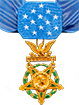 Medal of Honor |
| Discussion Forum | Daily Updates | Reviews | Museums | Interviews & Oral Histories |
|


