|
 |
|
|
| Missing In Action (MIA) | Prisoners Of War (POW) | Unexploded Ordnance (UXO) |
| Chronology | Locations | Aircraft | Ships | Submit Info | How You Can Help | Donate |
|
| USN Portland Class Heavy Cruiser 9,950 Tons (As Built) 10,110 Tons (Standard) 610' 3" x 66' 1" x 17' 4" 9 x 8" .55 cal guns (3x3) 8 x 5" .25 cal guns 3 x 3 pounder guns 4 x floatplanes 2 x catapults 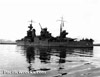 USN October 1942 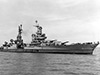 USN July 10, 1945 |
Sinking History Built by New York Shipbuilding Corporation in Camden, New Jersey. Laid down March 31, 1930 as a Portland Class Heavy Cruiser at a contract price of $10,903,200. Launched November 7, 1931 as USS Indianapolis sponsored by Miss Lucy Taggart, daughter of the late Senator Thomas Taggart who was formerly mayor of Indianapolis. This was the second ship named Indianapolis for the city of Indianapolis, Indiana. Commissioned November 15, 1932 into the U.S. Navy (USN) at Philadelphia Navy Yard with Captain John M. Smeallie in command. Prewar After a shakedown in the Atlantic Ocean and Guantánamo Bay until February 23, 1932 then steamed to the Canal Zone (CZ) and transited the Panama Canal into the Pacific Ocean and underwent additional training exercises and operated off the coast of Chile. After overhaul at the Philadelphia Navy Yard, departed for Maine. On July 1, 1933 embarked U.S. President Franklin Roosevelt from Campobello Island in New Brunswick, Canada. Departing later that day and two days later arrived at Annapolis, Maryland where six members of the Cabinet toured the battleship. On July 4, 1933 after disembarking the U.S. President Franklin Roosevelt departed Annapolis and returned to the Philadelphia Navy Yard. Afterwards, Indianapolis acted as flagship for the remainder of her peacetime career. On November 18, 1936 at Charleston again welcomed aboard U.S. President Franklin Roosevelt for a "Good-Neighbor" cruise to South America transporting the President Roosevelt to Rio de Janeiro, Buenos Aires, and Montevideo, Indianapolis returned to Charleston on December 15, 1936 when the President and his party disembarked. Wartime History On December 7, 1941, Indianapolis was making a simulated bombardment of Johnston Island when the Japanese attacked Pearl Harbor. Afterwards, she joined Task Force 12 (TF 12) and unsuccessfully searched for Japanese carriers reportedly still in the vicinity. On December 13, 1941 arrived at Pearl Harbor and joined Task Force 11 (TF-11) that sortied for the South Pacific. On February 16, 1942 Task Force 11 (TF-11) was northeast of Rabaul and her carrier planes planned a strike in conjunction with U.S. Army Air Force (USAAF) B-17E Flying Fortresses from northern Australia. On February 20, 1942 the task force was spotted by the Japanese and targeted by two waves of G4M1 Bettys from the 4th Kōkūtai (4th Air Group). The bombers were intercepted by F4F Wildcats from USS Lexington (CV-2) and anti-aircraft fire claimed seventeen bombers shot down. Although none of the ships were damaged, the carrier plane strike scheduled for February 21, 1942 was aborted. On March, 10, 1942 operated in the Gulf of Papua to defend USS Yorktown (CV-5) for a strike by carrier aircraft against Lae and Salamaua. Afterwards, Indianapolis returned to Mare Island for an overhaul and alterations. Afterwards, escorted a convoy to Australia. Next, proceeds to the North Pacific to the Aleutian Islands and joins Task Group 8.6 (TG 8.6) bombardment group. On August 7, 1942 Rear Admiral William W. Smith's Task Group 8.6 (TG 8.6) bombardment group shells Kiska Island including USS Louisville (CA-28), USS Indianapolis (CA-35), USS Nashville (CL-43), USS Honolulu (CL-48) and USS St. Louis (CL-49) plus destroyers USS Elliot (DD-146), USS Reid (DD-369), USS Case (DD-370), USS Gridley (DD-380) and USS McCall (DD-400). Although fog limited observation their floatplanes reported ships sinking in Kiska Harbor and fires burning among shore installations. The Japanese were caught by surprise and took fifteen minutes before shore batteries returned fire and Japanese seaplanes made ineffective attacks. The operation was considered a success despite the scanty information on its results. In January 1943, Indianapolis supported the occupation of Amchitka Island. On February 19, 1943 during the night Indianapolis and two destroyers patrolled southwest of Attu Island, hoping to intercept enemy ships running reinforcements and supplies to Kiska Island and Attu Island, she contacted a Japanese cargo ship, Akagane Maru. The cargo ship tried to make a reply to the challenge but was shelled and exploded with no survivors, presumably because she was laden with ammunition. Until the middle of 1943, Indianapolis continued to operate in the Aleutian Islands and Alaska escorting convoys and covering amphibious landings. After another refit at Mare Island, Indianapolis proceeded to Pearl Harbor where she became the flagship of Vice Admiral Raymond A. Spruance commanding the 5th Fleet. On November 10, 1943 departs Pearl Harbor with the main body of the Southern Attack Force for Operation Galvanic, the invasion of the Gilbert Islands. On November 19, 1943 Indianapolis bombarded Tarawa and next day hit Makin Island. The ship then returned to Tarawa Island and provided fire-support for the landings. That day her guns shot down an enemy plane and shelled enemy strong points on Tarawa during the battle. On January 30, 1944 Indianapolis was part of a cruiser group that arrived off Kwajalein Atoll and began shore bombardment of targets before the amphibious landing. On January 31, 1944 while the U.S. Marines landed, credited with silencing two shore batteries. On Februray 1, 1944 credited with obliterated a blockhouse and other shore installations and supported advancing troops with a creeping barrage then continued to provide fire support until departing on February 4, 1944. During March 1944 until April 1944, Indianapolis supported the operations in the Western Carolines including support for the March 30, 1944 to March 31, 1944 U.S. Navy carrier aircraft raids against shipping off Palau. In addition, airfields were bombed and surrounding waters mined to immobilize enemy ships. On March 31, 1944 both Yap and Ulithi were hit and on April 1, 1944 Woleai was attacked. During these three days, Japanese planes attacked the U.S. fleet but were driven off without damaging the American ships. Indianapolis claimed the shoot down of a her enemy plane, a torpedo bomber. These attacks prevented Japanese in the Carolines from interfering with U.S. landings in New Guinea. In June 1944, the 5th Fleet conducted the assault on the Mariana Islands. Raids on Saipan began with carrier-based planes on 11 June, followed by surface bombardment, in which Indianapolis had a major role, from 13 June. On D-Day, 15 June, Admiral Spruance received reports that a large fleet of battleships, carriers, cruisers, and destroyers was headed south to relieve their threatened garrisons in the Marianas. Since amphibious operations at Saipan had to be protected at all costs, Admiral Spruance could not draw his powerful surface units too far from the scene. Consequently, a fast carrier force was sent to meet this threat while another force attacked Japanese air bases on Iwo Jima and Chichi Jima in the Bonin and Volcano Islands, bases for potential enemy air attacks. A combined US fleet fought the Japanese on June 19, 1944 in the Battle of the Philippine Sea. Japanese carrier planes, which hoped to use the airfields of Guam and Tinian to refuel and rearm and attack American off-shore shipping, were met by carrier planes and the guns of the Allied escorting ships. That day, the US Navy destroyed a reported 426 Japanese planes while losing only 29. Indianapolis herself shot down one torpedo plane. This day of aerial combat became known throughout the fleet as the Battle of the Philippine Sea (Great Marianas Turkey Shoot). With Japanese air opposition wiped out, the US carrier planes pursued and sank Hiyō, two destroyers, and one tanker and inflicted severe damage on other ships. Two other carriers, Taihō and Shōkaku, were sunk by submarines. Indianapolis returned to Saipan on June 23 to resume fire support there and six days later moved to Tinian to smash shore installations. Meanwhile, Guam had been taken; and Indianapolis was the first ship to enter Apra Harbor since that American base had fallen early in the war. The ship operated in the Marianas for the next few weeks, then moved to the Western Carolines where further landings were planned. From 12-29 September, she bombarded the Island of Peleliu, both before and after the landings. She then departed for Manus where she operated for 10 days before returning to the Mare Island for overhaul. On February 14, 1945 joined the fast carrier task force under the command of Vice Admiral Marc A. Mitscher before their attack on Tokyo to cover the upcoming landing on Iwo Jima. The raid achieved complete tactical surprise by approaching the Japanese coast under cover of bad weather prior to the raids on February 16-17, 1945. Throughout the action, Indianapolis was a support ship. Immediately after the strikes, the Task Force proceeded to the Bonin Islands to support the landings on Iwo Jima. The ship remained there until March 1, 1945 to protecting the invasion force and provide fire support against shore targets. The ship returned to Vice Admiral Marc A. Mitscher's Task Force in time to strike Tokyo again on February 25, 1945 and Hachijo off the southern coast of Honshū the following day. Despite extremely bad weather, the raids claimed 158 planes and five small ships sunk, damaged to ground installations and trains. On March 14, 1945 departed Ulithi with the fast carrier force bound for Japan. On March, 18, 1945 while 100 miles southeast of Kyūshū, the carriers launched strikes against airfields and ships in Kobe and Kure. On March 21, 1945 a force of 48 enemy aircraft attempt an attack but were intercepted by defending fighters 60 miles away shooting down every plane before they could strike. On March 24, 1945 participated in the pre-invasion bombardment of Okinawa for seven days with Indianapolis contributing 8" gunfire targeting beach defenses. Meanwhile, enemy aircraft repeatedly attacked the ships, and Indianapolis shot down six planes and damaged two others. On March 31, 1945 in the early morning, lookouts spotted a Japanese fighter as in a vertical dive aiming at the bridge. In defense, the ship's 20mm cannons opened fire less than 15 seconds after it was spotted as the enemy plane was over the ship. Tracers converged on it, causing it to swerve, but the enemy pilot managed to release a bomb from a height of 25' before crashing into the port stern. The plane toppled harmlessly into the sea, but the bomb plummeted through the deck, into the crew's mess hall, down through the berthing compartment, and through the fuel tanks before crashing through the keel and exploding underwater. The concussion blew two gaping holes in the keel and flooded nearby compartments, killing nine crewmen. Although Indianapolis began to settled slightly by the stern and listed to port, there was no progressive flooding and steamed to a salvage ship for emergency repairs. Afterwards, inspection revealed that her propeller shafts were damaged, her fuel tanks ruptured and water-distilling equipment ruined. Despite the damage, the cruiser steamed under her own power across the Pacific Ocean back to Mare Island for repairs and overhaul. Afterwards, proceeded to Tinian island transporting parts and the uranium projectile for the "Little Boy" atomic bomb dropped on Hiroshima. On July 16, 1945 departed San Francisco and three days later arrived at Pearl Harbor then proceeded alone to Tinian Island arriving July 26, 1945 where her top secret cargo was unloaded. Afterwards, departed for Guam and where some of the senior crew were replaced with replacements sailors. Two days later. she departed bound for Leyte where the crew was to receive additional training before continuing to Okinawa to join Task Force 95 (TF-95) under the command of Vice Admiral Jesse B. Oldendorf. Sinking History On July 30, 1945 at 12:14am Indianapolis was hit by two Type 95 torpedoes fired by Japanese submarine I-58 in the North Philippine Sea. One hit the bow and the other hit amidships and the explosions caused massive damage and a heavy list then began to settle by the bow. Twelve minutes later at 12:26am, she rolled over and her stern lifted upward before sinking at roughly Lat 12° 2′ 0″ N Long 134° 48′ 0″ E. In total, Indianapolis earned ten battle stars for her World War II service. Fates of the Crew Approximately 300 of the crew went down with the ship. The remaining 900 survivors, many without life jackets and only a few lifeboats. Without food or water, the survivors drifted in the shark-infested open sea for four days until spotted and rescued. The rescued crew included Captain Charles B. McVay III. Search On July 31, 1945 when Indianapolis failed to reach Leyte, her failure to arrive was not detected and no searches were immediately undertaken. On August 2, 1945 at 10:25am a PV-1 Ventura from VPB-152 piloted by flown by Lt. Wilbur Gwinn and copilot Lt Warren Colwell on a routine patrol flight spotted men in the water and dropped them a life raft and radio. On August 3, 1945 PBY Catalina from Peleliu Airfield spotted and reported the survivors. Afterwards, all available air and surface units were sent to the location to rescue the survivors. By then, only 316 men were still alive. Court Martial In November 1945, Captain Charles B. McVay III was court-martialed for failing to zigzag, although he was ordered to "zigzag at his discretion, weather permitting" and Mochitsura Hashimoto, former captain of I-58 testified that zigzaging would not have prevented the sinking. Later, Admiral Nimitz remitted his sentence and returned him to active duty until he retired in 1949 with the rank of Rear Admiral. In 1968 at age 70 he committed suicide. In July 2001, the United States Secretary of the Navy ordered McVay's Navy record cleared of any wrongdoing. Memorials At total of 879 sailors were lost in the sinking. The crew that remain listed as Missing In Action (MIA) are memorialized at Manila American Cemetery on the courts of the missing. The Indiana State Museum includes materials related to Indianapolis. Her commissioning pennant are located at the Heslar Naval Armory. The swim training center at United States Navy Recruit Training Command is named USS Indianapolis. On August 2, 1985, the USS Indianapolis National Memorial was dedicated on the Canal Walk in Indianapolis, Indiana. In 2007, the USS Indianapolis Museum opened at the Indiana World War Memorial Military Museum. In May 2011, highway I-465 around Indianapolis was named "USS Indianapolis Memorial Highway". Shipwreck Between 2001–2016 several expeditions unsuccessfully searched for the shipwreck of USS Indianapolis. The first effort between July-August 2001 used side scan sonar. The second effort in June 2005 and was covered by National Geographic. Only pieces of metal were found in the reported sinking, but never confirmed to belong to the ship. This expedition was broadcast in the documentary "Finding of the USS Indianapolis". During July 2016 a new position was located in the records of LST-779 and National Georgraphic planned another effort in the middle of 2017. On August 18, 2017 the shipwreck was discovered at a depth of 18,000' / 5,500m by the USS Indianapolis Project aboard RV Petrel funded by Paul Allen and the news of the discovery was released days later. During September 2017 a detailed map of the shipwreck was released. The exact location is kept secret to protect the shipwreck as a war grave. Most of the shipwreck rests in an impact crater on a rocky bottom. Due to the depth, the ship's condition and preservation is excellent with paint visible including the name "Indianapolis". Before the ship sank, the bow broke off and came to rest 1.5 miles to the east of the main shipwreck. Two 8" guns broke off at the surface sank 1/2 mile east of the main wreckage and was the last surface position before sinking. The wreckage of the floatplanes are .6 miles away having broke free while sinking. References Naval History and Heritage Command (NHHC) - Indianapolis (CA 35) NavSource - USS Indianapolis (CA 35) CNN "USS Indianapolis discovered 18,000 feet below Pacific surface" August 20, 2017 USNI News "USS Indianapolis Wreckage Well Preserved by Depth and Undersea Environment" August 23, 2017 CNN "A sunken warship, a lost hero and the discovery that reunited an American family" September 30, 2017 Contribute
Information Last Updated
|
 18,000' / 5,500m |
| Discussion Forum | Daily Updates | Reviews | Museums | Interviews & Oral Histories |
|