|  |
|
| |
|
| Missing In Action (MIA) | Prisoners Of War (POW) | Unexploded Ordnance (UXO) |
| Chronology | Locations | Aircraft | Ships | Submit Info | How You Can Help | Donate |
|
| USAAF 5th AF 19th BG Former Assignments 7th BG 14th BS 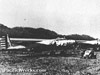 USAAF Sept 9, 1941  USAAF c1944  USAAF June 1945  NASM 1946  NASM 1999  USAF Museum 2008 |
Aircraft History Built by Boeing at Seattle completed as the 38th model D manufactured. Constructors Number 2125. On April 25, 1941 delivered to the the U.S. Army Air Corps (USAAC) as B-17D Flying Fortress serial number 40-3097. Wartime History Assigned to the 7th Bombardment Group (7th BG), 14th Bombardment Squadron (14th BS). Tail number 21 with red and white striped rudder. Nicknamed "Old Betsy" without nose art. On May 13, 1941 took off from Hamilton Field on an ferry flight of B-17Cs and B-17Ds bound for Hickam Field on Oahu and landed safely on May 14, 1941 in the morning. On June 20, 1941 became part of the U.S. Army Air Force (USAAF). During early September 1941 departs Hickam Field as part of a B-17 formation across the Pacific bound for the Philippines. On September 9, 1941 landed at 7 Mile Drome near Port Moresby in New Guinea to refuel. On September 10, 1941 landed at Batchelor Field near Darwin as the first flight of B-17s in Australia then departs on the last leg of the flight to the Philippines. At the time, this was the longest mass flight of land based aircraft in the world. On December 2, 1941 attached to the 19th Bombardment Group (19th BG) part of the Far East Air Force (FEAF). Wartime History On December 8, 1941 took off from Del Monte Airfield pilot unknown with co-pilot Robert S. Clinkscales on a reconnaissance mission that was likely the first American combat mission of the Pacific War. In the middle of December 1941, took off from Del Monte Airfield piloted by Goodman on a bombing mission against Japanese forces in Lingayen Gulf. Soon after taking off, it experienced engine trouble and bombed the alternate target Davao after dark, as the first American night bombing mission of the Pacific War. At the end of December 1941, evacuated from the Philippines from Del Monte Airfield south to Singosari Airfield (Malang) on Java. On January 3, 1942 took off from Singosari Airfield on Java piloted by Major Cecil Combs (C. O. 19th Bombardment Group (19th BG) leading seven B-17Ds including B-17D 40-3067 on a flight to Samarinda Airfield and loaded with bombs and refueled. On January 4, 1942 took from Samarinda Airfield to bomb Japanese shipping in Davao Bay off Mindanao and returns. On January 5, 1942 flown back to Singosari Airfield. On January 11, 1942 at 5:55am took off from Malang Airfield or Singosari Airfield on Java piloted by Major Cecil Combs armed with Dutch 600 pound bombs as one of seven B-17D Flying Fortresses on a bombing mission against the Japanese landing force off Tarakan Island. Inbound over the Java Sea at 9,500' the formation encountered a tropical storm and became separated. Due to bad weather only three B-17Ds reached the target at 11:30am and bombed from 21,000' and all missed then were intercepted by three A6M Zeros that slightly damaged this bomber. Aboard, her gunners claimed two fighters shot down before the third broke off attacks. Returning, this B-17 landed at Soerabaja Airfield on the north coast of Java. On January 12, 1942 took off from Soerabaja Airfield and returned to Singosari Airfield. During late January 1942, flown to Laverton Field near Melbourne for a complete overhaul. During the repair, this bomber was fitted with a new tail scavenged from B-17D 40-3091. After repairs, pilot Captain Weldon Smith from 19th Bomb Group dub the bomber "The Swoose" after the popular song Alexander the Swoose from a ditty written by Franklin Furlett and performed by bandleader Kay Kyser about a bird that was "half swan, half goose: Alexander is a swoose". On the right side of the fuselage was painted a bird with the nickname "The Swoose" in double quotations with smaller "It Flys" [sic]. In Australia, the B-17 flew navigation and escort missions for fighters and anti-submarine patrols until withdrawn from duty in March 1942. Afterwards, used a VIP transport in Australia and flew Lt. General George H. Brett from Australia across the Pacific back to the United States arriving August 4, 1942. On December 9, 1942 "Swoose" was flown to Panama and assigned to the Caribbean Defense Command for use by General Brett, a combat vet from another theater to serve in Panama. Operated by CDC-PCD flight section. The regular pilot was Captain Jack Crane. Went to the Panama Air Depot (PAD) at Albrook Field for work and was extensively modified, completed January 1943. Returned to PAD for additional word between April to July 1943 but continued to make flights during this period. By 1944, the aircraft required extensive repairs following an inspection during February that revealed cracked wing spars and corrosion that required the replacement of the inner wing panels. On March 7, conference was held at 6th Air Force service command to determine of the repairs were cost effective. A pair of B-17D inner wing panels were discovered by Captain Jack Crane at France Field and these were shipped on March 8, 1944 via barge from Albrook Field via the Panama Canal arriving the next day to Albrook Field. Deciding to proceed, "Swoose" returned PAD on March 20, 1944 and the major overhaul and rework on the entire airframe was begun, requiring a double shift of personnel to perform the work. On April 22, 1944 General Brett personally inspected the work, then only 45% complete. During the overhaul, the paint was removed to a bare aluminum finish with the circular nose art and nickname retained forward of the right waist blister. The tail had serial number "03097" in black and the U.S. star and bar insignia on the rear fuselage upper left wing and lower right wing. On the right side of the nose were the rectangular flags of all nations the B-17 had visited. Inside, four additional passenger seats and a galley were added and all equipment with upgraded to the B-17 model E standards. By June 1, 1944 all repairs were completed but cost more than the aircraft when it was newly built. During late 1944, redesignated "RB-17D", the "R" for restricted but continued to be used by General Brett in Panama until the end of World War II. Postwar During December 1945, General Brett personally made the bomber's last flight from Mines Field (Los Angles Airport) to Kirtland Field, New Mexico. Afterwards, the B-17 was assigned to the War Assets Administration facility at Kingman, Arizona where it would be scrapped. Instead, saved by the efforts of Col. Frank Kurtz, who flew the bomber and named his daughter Swoosie Kurtz after it. On April 6, 1946, Kurtz flew the B-17 to Mines Field (Los Angles Airport) with passengers aboard including the mayor of Los Angeles and Mrs. Kurtz. Following acceptance ceremonies, airport personnel stored "Swoose" inside a hangar at the airport. Plans for war memorial fell through and Frank Kurtz arranged for the National Air Museum in Washington to acquire the aircraft instead. Storage During May 1948, Kurtz flew "Swoose" to Park Ridge, IL for storage. In June 1950 the USAF claimed the Park Ridge facility for military use. On Jan 18, 1952, an Air Force crew flew the plane to Pyote Airfield in Texas for storage. On December 3, 1953 flown to Andrews AFB, Maryland and stored outdoors for six years. In April 1961, the plane was transported by truck to the National Air & Space Museum (NASM) Paul Garber Facility and placed into storage in a preserved in an unrestored state from 1961-2008. The drift meter from this bomber is part of the NASM collection, Inventory Number: A19500075025. This is the oldest B-17 Flying Fortress in the world. During July 2008, "The Swoose" was moved from NASM Paul Garber Facility to the National Museum of the United States Air Force (USAF Museum) arriving on July 14, 2008. Visitors can see "The Swoose" in the restoration facility by signing up for a behind the scenes tour each Friday. Advanced registration is required. Restoration At this time, USAF Museum staff has not finalized restoration plans. The Swoose will undergo an extensive and detailed technical inspection. Based on the findings, the museum will determine how to best restore and display the historic aircraft. The extensive restoration is expected to take at least seven years. Eugene Eisenberg adds: "The pilot of B-17D 40-3095 was Hank Godman, who became the personal pilot of General Douglas MacArthur during the early part of the war. His bombardier was John Wallach. I have his 1941 flight jacket that was given to him after flight training." Relatives Swoosie Kurtz (daughter of Col. Frank Kurtz) was named named "Swoosie" for this bomber. References USAF Serial Number Search Results - B-17D Flying Fortress 40-3097 "3097 (19th BG, *Swoose*) only known US military aircraft to have flown a combat mission on the first day of US entry into WW II and to remain in continuous military flying service throughout the conflict. Original user was 19th BG. After bombing raids against the Japanese in Java, 40-3097 survived the Philippines campaign to be used as the personal VIP transport of the Panama Canal Department/Caribbean Defense Command Flight Section CO and was flown all over Latin America. It then became a ground training air frame for New Haven cadets. Throughout the war, it was continually rebuilt with wreckage of other B-17s and kept on flying in SW Pacific. Later assigned as personal transport of Gen George Brett. At end of war, consigned to Kingman, AZ for scrapping, but was saved by Frank Kurtz, its wartime pilot, who arranged for the city of Los Angeles to accept it as a war memorial. On April 6, 1946, Kurtz flew the airplane to Mines Field, the Los Angeles municipal airport. Among his passengers were the mayor of Los Angeles and Mrs. Kurtz. Following acceptance ceremonies, airport personnel stored the B-17 inside a hangar. Plan for war memorial fell through and Frank Kurtz arranged for the National Air Museum to acquire the aircraft. Kurtz flew the plane in May 1948 to the old C-54 assembly plant at Park Ridge, IL for storage. In June 1950 the USAF claimed the Park Ridge facility for military use, and the Smithsonian officials abandoned the hangar. On Jan 18, 1952, an Air Force crew flew the plane to Pyote, TX for storage. Flown to Andrews AFB, MD Dec 3, 1953 and stored outdoors there for six years. In April 1961, the plane was trucked to the Paul Garber Preservation, Restoration, and Storage Facility at Silver Hill, MD. Is to be restored and put on display at Smithsonian museum at Dulles Airport, Washington. Fuselage moved by truck to USAF Museum Jul 11, 2008 for restoration. Wings will follow later." The Swoose: Odyssey of a B-17 (1993) by Herbert S. Brownstein, Smithsonian Press Alae Supra Canalem (1997) pages 55 (photo), 56, 151-152 B-29 Hunters of the JAAF (2000) page 14 Fortress Against The Sun (2001) pages 28, 65, 99-100, 117, 132-133, 155, 157-158, 383, 386, 396, 406, 416 Every Day A Nightmare (2010) page 55 (January 11, 1942 B-17D mission) NASM Profile B-17D "Swoose" via WayBackMachine, removed after transfer to USAF museum The Swoose comes home to roost at the National Museum of the U.S. Air Force July 14, 2008 NASM Drift Meter, B-3, Boeing B-17D "Swoose" Inventory Number A19500075025 National Museum of the United States Air Force - Boeing B-17D "The Swoose" Contribute
Information Last Updated
|
 B-17  Photo Archive |
| Discussion Forum | Daily Updates | Reviews | Museums | Interviews & Oral Histories |
|