|  |
|
| |
|
| Missing In Action (MIA) | Prisoners Of War (POW) | Unexploded Ordnance (UXO) |
| Chronology | Locations | Aircraft | Ships | Submit Info | How You Can Help | Donate |
|
 Unknown circa 1940  USAAF August 8, 1945 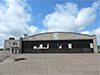 106 Group May 25, 2021 |
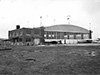
Location 46° 50' 32N 92° 11' 37W Duluth Airport is located at an elevation of 1,428' / 435m in Duluth in Saint Louis County, Minnesota in the Upper Midwestern region of the United States. In 1930, opened as Williamson–Johnson Municipal Airport. In 1961, renamed Duluth International Airport (Duluth Airport). Construction During 1929, Duluth purchased 640 acres of property from Saint Louis County that were developed into an airfield with two 2,650' runways surfaced with sod. In 1930, opened as Williamson–Johnson Municipal Airport. The facilities included Hangar 622 with brick pillars and a sliding door. During 1940, Northwest Airlines began their first regularly scheduled service to Duluth until suspended during World War II. Wartime History By 1942, a third runway was built and all three runways measuring 4,000' x 150' were paved. They were oriented at 30° (3–21), 90° (9-27), and 130° (13-31). During 1945, the U.S. Army Corps of Engineers extended Runways 9–27 and 3–21 to 5,699'. On August 8, 1945 transport C-54 Skymaster 44-9042 landed at Duluth Airport with the Casket of Major Richard I. Bong. Also aboard was his widow, Marjorie "Marge" Bong and her friend C. Clarence Toy with military escort Colonel Kenneth McGregor and eight pilots assigned to Long Beach who would serve as honorary pall bearers on a flight to Duluth Airport. On arrival, his casket was received by a military honor guard then transport to Superior, Wisconsin for his funeral then burial in Poplar, Wisconsin. Postwar During 1951, the U.S. Air Force (USAF) extended runway 9-27 to 9,000' with a 1,000' overrun added a control tower. In 1954 a terminal building was added south of runway s 9-27 and 3-21. During 1956, runway 9-27 was rebuilt and extended in 1966 to 10,152'. In 1961, renamed Duluth International Airport (Duluth Airport). In 1973 a new terminal building was U.S. customs buildings were added east of runway 13-31 and the runway shortened to 2,578' for the construction of a new arrivals building and when completed that runway was closed and later became 75' wide taxiway. In 1989 the newer terminal building and adjacent buildings were enclosed. The original terminal building became offices for general aviation, FAA and U.S. Weather Bureau. Since 2001, the Duluth Air & Aviation Expo is held at Duluth Airport. In 2013 a new passenger terminal was built in front of the existing terminal. On October 30, 2015 the newly built terminal was named for Jim Oberstar (U.S. Representative 1975–2011) and helped secure funding for the expansion. Today Duluth Airport is a joint civil-military airport. Airport codes: FAA: DLH ICAO: KDLH IATA: DLH. The airport has two runways. The first 21/03 measures 5,699' x 150' surfaced with asphalt. The second oriented 27/09 measures 10,152' x 150' surfaced with concrete. The Minnesota Air National Guard (ANG) 148th Fighter Wing operating F-16C Fighting Falcons at Duluth Air National Guard Base at Duluth Airport. Cirrus Aircraft is headquartered at Duluth Airport with manufacturing facilities, innovation center, and offices. Hangar 622 4525 Airport Approach Road built circa 1930 References Duluth International Airport official website Air National Guard - 148th Fighter Wing official website Department of Defense Legacy Reource Management Program "Historical and Architectural Overview of Aircraft Hangars of the Reserves and National Guard Installations from World War I through the Cold War" June 2011 [PDF] via WayBack Machine March 23, 2022 106 Group "Reconnaissance Architectural History Survey for the Duluth International Airport Master Plan Project' September 2021 [PDF] Contribute
Information Last Updated
|
 Map Fallingrain Map Mapcarta  Photo Archive |
| Discussion Forum | Daily Updates | Reviews | Museums | Interviews & Oral Histories |
|