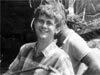
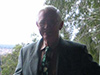
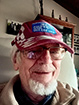
William G. Chapman
Papua New Guinea Resident 1961–1981
Founder The Air Museum of Papua New Guinea
In memory: William G. Chapman passed away August 26, 2026.
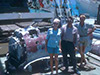
William "Bill" G. Chapman
was born March 17, 1935 in Australia. Between 1961 until 1981 he lived in Papua New Guinea and worked as a chemist (pharmacist) at Chapman Pharmacy
in Port Moresby. His father-in-law was a pilot in the Netherlands East Indies Army Air Force (NEIAF), No. 18 Squadron flying with Royal Australian Air Force (RAAF) in the Pacific during World War II.
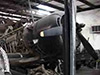
In the 1960's, Chapman founded The Air Museum of Papua New Guinea that was located on Waigani Drive behind Tubmans Paint near the South Pacific Car Club (SPCC) in Port Moresby. He oversaw the recovery and collection of historic aircraft, vehicles to the collection. In 1968, Bruce Hoy began to volunteer with Chapman and his museum. Later, The Air Museum of Papua New Guinea closed and the collection was transfered to the National Museum & Art Gallery (NMAG) with Bruce Hoy the first modern history curator. During the late 1960s and 1970s, The Air Museum of Papua New Guinea led by Chapman oversaw the recover or export of 47 aircraft from Papua New Guinea.
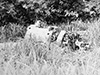
In 1963, Chapman and Ray Fairfield visited the crash site of P-38G Lightning pilot 2nd Lt John Franklin McIntyre II crashed near
Goldie Barracks outside Port Moresby.
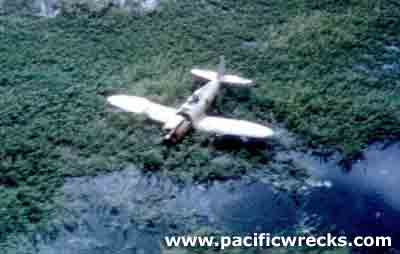
In 1965, he documented a A6M Zero at Kerevat Airfield. Also during 1965, Chapman decided to recovery P-47D "Carter's Li'l Pill" 42-8066 that force landed into Waigani Swamp (Gavagabada) and began building a track to the plane over several years. In 1968, the plane ws lifted onto a truck but due to wet season conditions, cut into five sections for easier transport to the South Pacific Car Club (SPCC) in Port Moresby. During 1967, he accepted the donation of CA-1 Wirraway A20-13 that three years later went to the Civil Aviation Training College and later displayed at Jackson Airport.
In 1968, he recovered P-47D "Frankie" 42-8130 including the engine, cockpit section and tail from Hula Airfield for use as spare parts for the P-47 restoration. Also during 1968, he recovered P-39D Airacobra 41-6970 from Gaile transported the plane to Port Moresby for the proposed museum. He also recovered the 37mm cannon from P-39 Airacobra piloted by 1st Lt Frederic T. Burley crashed at Tubusereia.
In November 1969, Chapman also attempted to recover F-5A Lightning 42-13084 from Waigani Swamp (Gavagabada) but the recovery crane got bogged in the swamp and broke and the effort was abandoned at the start of the wet season. Later, the plane was recovered to the PNG
War Museum.
In the late 1960s, he became friends with Robert Diemert. In January 1969, Chapman aided him when Japanese aircraft wreckage recovered from southern Bougainville and the northern Solomon Islands was shipped to Port Moresby and in December 1968 until January 1969 stored at Jackson Airport until exported aboard a Royal Canadian Air
Force (RCAF) C-130 Hercules to Canada.
In the early 1970s, Chapman also had an idea to recover Ford
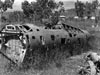
Trimotor A25-1 upside down at Myola Airfield but never took any action to recover the plane. Later, the plane was recovered by Royal Australian Air Force (RAAF) and delivered to the PNG
War Museum.
On April 13, 1973 Kell Nielsen led Chapman to the crash site of B-24D Liberator 41-23755 and reported bombs at the site that were later detonated by the Australian Army.
In 1974, he authorized the salvage of
P-40E Kittyhawk E1127.
During the 1970s, Chapman visited the crash site of
P-40E Kittyhawk A29-8 piloted by Squadron Leader John F. Jackson for whom Jackson Airport (7-Mile Drome) was named in his honor.
During the visit, a rudder pedal was recovered for the museum.
Also, they recovered its guns. The
plane crashed vertically, and wings compressed from 8' to 8".
They also recovered engine and cockpit pieces, from a 10' crater from the crash.
Also during the 1970s, fishermen from Porebada recovered a control column while fishing on a reef and donated it to Chapman for inclusion in the Air Museum of Papua New Guinea. This artifact is likely from S.23 "Camilla" "Camilla" Empire Flying Boat VH-ADU. Later, accessioned into the PNG Museum collection as item 7814 / Empire Flying Boat.
Champan and Charles
Darby were early visitors to B-17E
41-2446. The two recovered a machine gun, bullets, a thermos, pistols
all donated to
the
museum. He was involved with costing out several recovery operations
for the wreck that were never carried out, including one offering
$250,000 AUD.
In addition, Chapman personally restored a Jeep with friend Larry Heath and exported it to Australia. When the National Museum & Art Gallery (NMAG) / PNG
War Museum was established, he donated it to the museum and it was flown back to Port Moresby aboard a Qantas aircraft. He was also involved in a Dodge Weapons Carrier restored in Lae and purchased for the National Museum & Art Gallery (NMAG) / PNG
War Museum.
According to Chapman, he acquired a cannon from the residence of Queen Emma. This canon was recovered from the failed New France colony at Port Breton on southern New Ireland after she aided the surviving colonists. The canon was displayed at her residence at Herbertshöhe (Kokopo). During the Japanese occupation of the area was buried by locals to prevent it from being taken. Chapman claimed he fired the canon in Port Moresby.
References
Post Courier "Crashed Bomber Found" December 18, 1970
P-40E Serial Number 41-36166 Research Notes by Charles Darby
Thanks to
William G. Chapman and Bruce Hoy for additional information
|