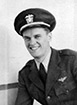
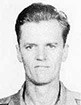
Squadron Leader John Van Kuren “Scarsdale Jack” Newkirk
American Volunteer Group (AVG) "Flying Tigers", 2nd Squadron "Panda Bears"
P-30 Warhawk pilot died March 24, 1942
Background
John Van Kuren Newkirk was born October 13, 1913 in New York City. He grew up in Scarsdale, Westchester County in New York and his first job was working as a copy boy at the New York Times. In the fall of 1932, he enrolled at attended Rensselaer Polytechnic Institute (RPI) and studied aeronautical engineering and graduated with the class of 1936. Newkirk enlisted in the U.S. Army and was commissioned as a 2nd Lieutenant in the infantry and served for three years. Next he enlisted in the U.S. Navy (USN) and attended flight school, earned his wings and was commissioned with the rank of ensign then assigned to USS Yorktown (CV-5) as a carrier pilot.
Wartime History
During 1941, at age 27, he resigned his commission and joined the American Volunteer Group (AVG) "Flying Tigers", 2nd Squadron "Panda Bears" with the rank of Squadron Leader. Nicknamed "Scarsdale Jack" for his hometown or simply "Scarsdale". He flew combat missions over China, Burma and Thailand. During January 1942 he claimed a total of seven aerial victories against Japanese Army Air Force (JAAF) fighters and bombers.
On January 3, 1942 three P-40B Warhawks led by Jack Newkirk leading James Howard and David Hill on a mission to strafe Raheng Airfield in Thailand. They arrived just while Ki-27s from 77th Hiko Sentai (77th Flying Regiment) were landing. The Japanese fighters were from Lampong had raided Moulmein air base and were using Raheng for refueling. Some of the Ki-27s had just landed as Newkirk, James Howard and David Hill approached. Some of the Ki-27s from the third element actually followed the P-40s, misidentifying them as Spitfires. Seeing many aircraft lined up on the ground, Howard went down to strafe unaware that he had a Ki-27 on his tail. Newkirk turned in behind this, opened fire and reported that it crash-landed, turned over and burst into flames. Hill meanwhile claimed another fighter shot off Newkirk's tail, and Newkirk then claimed another before heading for home, whilst Howard reported the destruction of four fighters on the ground; troops who were firing at the strafers were also attacked. Newkirk did not realize that he had been under attack and when he returned 22 bullet holes were counted in his tail. Newkirk was credited with a Zero and I-96 shot down. In fact, only Ki-27 Nate pilot Warrant Officer Yokoyama was shot down and badly wounded. On the ground, one Ki-27 was burned, another badly damaged and one sustained lesser damage. During the combat, Ki-27 pilot Sergeant Major Matsunaga claimed one of the attackers shot down and Lieutenant Kisaij Beppu claimed a probable.
On January 9, 1942 in the afternoon,
four P-40s from AVG led by Squadron Leader John Newkirk plus six RAF Buffaloes strafe of Tak (Raheng) Airfield. The Americans reported observing "seven Buffaloes that the Japanese had evidently taken over from the Siamese", which were about to take off, whilst two others circled overhead; this latter pair were claimed shot down by Newkirk. During several strafing passes, Newkirk then claimed two ‘Buffaloes’ on the ground; Bright claimed another and Flight Leader Noel Bacon shared a fourth with Bob Layher. Meanwhile the 67 Squadron pilots reported destroying two ‘Type 97’ bombers by Flight Lieutenants Brandt in W8213 and Pinckney in W8239 and four damaged. Japanese records show that one aircraft was burned, one badly damaged, and one starter trolley destroyed.
On February 7, 1942 and February 8 1942 Newkirk leads P-40Bs from 2nd Squadron to escort RAF Blenheims to attack Pa-an on the Salween, while a column moving from Moulmein is also strafed. As a result of these actions, Newkirk was recommended for a British DSO.
Mission History
On March 24, 1942 in the morning took off piloting P-40B Warhawk P-8196 leading the formation of four P-40s from the 2nd Squadron on a strafing mission against Chiang Mai, following the main railroad line in search of targets to strafe. Over Lamphun, anti-aircraft guns opened fire. This P-40 was hit while diving and Newkirk was killed in the crash near Lamphun roughly 26 kilometers south of Chiang Mai. When this aircraft failed to return it was officially listed as Missing In Action (MIA). Also hit by anti-aircraft fire lost was P-40B Warhawk P-8115 pilot William "Mac" McGarry (POW, survived).
Wreckage
Afterwards, Newkirk was buried at the crash site. Afterwards, the wreckage was collected by Thai people and transported to the Lamphun police station and later to Chiang Mai. Postwar, Newkirk's remains were recovered and transported back to the United States.
Memorials
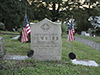
On May 11, 1949 interred at the St. James the Less Episcopal Church in Scarsdale, NY at the Newkirk family plot, reads: "John Van Kuren Newkirk, Squadron Leader, American Volunteer Group, Born October 15, 1913, "Until I have done all in my power I shall not return", Killed In Action over Thailand, March 24, 1942"
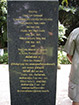
Newkirk is also memorialized on the AVG Memorial at Chiang Mai Foreign Cemetery with his name on a black pedestal in English and Thai "Those who defeated the Japanese in Burma, Thailand and China... Jack Newkirk".
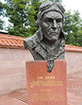
Newkirk has a bust in China atop a pedestal that reads in Chinese and English: "John Newkirk (? –1942) A member of the AVG Flying Tigers. With a dozen of victories [sic seven victories], he was awarded the Order of Blue Sky and White Sun Medal and Distinguished Flying Cross of the US. On March 24, 1942, he died in the attack at a Japanese fleet [sic rail road] near Chaing Mai in Thailand."
Aerial Victory Claims
Newkirk was officially credited with seven aerial victories between January 3, 1942 to January 23, 1942 and became an "ace" with a total of seven aerial victory claims.
| Victory |
Date |
Location |
Aircraft |
Notes on claim |
| 1 |
01/03/42 |
Raheng Airfield |
Zero (sic Ki-27) |
First aerial victory claim. |
| 2 |
01/03/42 |
Raheng Airfield |
I-96 (sic Ki-27) |
Second aerial victory claim. |
| 3 |
01/20/42 |
|
Ki-27 |
Third aerial victory claim. |
| 4 |
01/20/42 |
|
Ki-27 |
Fourth aerial victory claim. |
| 5 |
01/23/42 |
|
Ki-21 |
Fifth aerial victory claim, became an "ace". |
| 6 |
01/23/42 |
|
Ki-27 |
Sixth aerial victory claim. |
| 7 |
01/23/42 |
|
Ki-27 |
Seventh aerial victory claim. |
References
USAF Historical Study No. 85 USAF Credits For The Destruction of Enemy Aircraft, World War II does not list the aerial victory claims of John Van Kuren Newkirk or the American Volunteer Group (AVG).
Contribute Information
Do you have photos or additional information to add?
|