|  |
|
| |
|
| Missing In Action (MIA) | Prisoners Of War (POW) | Unexploded Ordnance (UXO) |
| Chronology | Locations | Aircraft | Ships | Submit Info | How You Can Help | Donate |
|
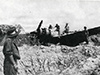 RAF May 1945 |
Location Lat 16° 54' 26N Long 96° 7' 60E Mingaladon Airfield (RAF Mingaladon) is located at an elevation of 109' above sea level near Mingaladon in northern Rangoon (Yangon). Also known as Mindan Airfield. Still in use today as a dual civil and military airport known as Rangoon International Airport (Yangon International Airport) with the military portion known as Mingalardon Air Force Base (Mingalardon AFB) in the Yangon Region of Myanmar (Burma). Prewar During the late 1930s, built by the British as a military airfield for use by the Royal Air Force (RAF) to defend the Rangoon area. Also known as RAF Mingaladon. Wartime History Starting in 1939, Mingaladon Airfield was defended by a company of the 12th Battalion, The Burma Rifles, Burma Territorial Force that were based at Mingaladon. Also based at the airfield was Communication Flight from Burma Volunteer Air Force equipped with Tiger Moths and Lysanders. In 1941, Mingaladon Airfield had three intersecting runways in a triangular shape connected by taxiways and dispersal areas. The first runway oriented east-west measured 1,320 yards. The second runway oriented northwest to southeast measured 1,250 yards. The third runway oriented north-south measured 1,400 yards. In September 1941, sixteen Buffalos from No. 67 Squadron arrived as the first military aricraft based at Mingaladon Airfield. On December 12, 1941 the American Volunteer Group (AVG) 3rd Squadron "Hell's Angels" arrived with P-40B Tomahawks. On December 23, 1941 was the first Japanese air raid against Rangoon with fifteen twin engine bombers striking Mingaladon Airfield with five shot down. In early March 1942, the Allies withdrew northward to Magwe Airfield. Allied units based at Mingaladon Airfield 1941–1942 Royal Air Force (RAF) No. 60 Squadron (Blenheim) February 1941–February 1942 No. 67 Squadron (Buffalos) September 1941 No. 135 Squadron (Hurriane II) October 1941–March 1942 AVG 3rd Squadron (P-40B) December 12, 1941 On March 7, 1942 the British Army retreats from the Rangoon area as the Japanese enter the city the same day and fully occupy area two days later. During the Japanese occupation, Mingaladon Airfield was used as a military airfield for to defend the Rangoon area. Starting in early May 1942, targeted by Allied bombers and later fighters until the middle of October 1944. American missions against Mingaladon May 9, 1942–October 18, 1944 Japanese units based at Mingaladon Airfield 1942–1945 21st Hiko Sentai (Ki-45) arrives March 1943–January 1944 In early May 1945, the British Army 26 Division (Indian) liberates the Mingaladon area. At Mingaladon Airfield, the Allies capture wrecked Japanese aircraft. Afterwards, repaired and used by Allied aircraft until the end of World War II. Allied units based at Mingaladon Airfield 1945 Royal Air Force (RAF) No. 681 Squadron (Spitfire) June 1945–September 1945 No. 607 Squadron (Spitfire) 1945 No. 357 Squadron detachment (Lysander) September 1945–November 1945 On August 26, 1945 two Ki-57 Topsys with green crosses lands at Mingaladon Airfield with the Japanese surrender delegation including Japanese Army Lt. General Takazo Numato and Japanese Navy Rear Admiral Chudo and his staff that meet with British Army Lt. General Francis I. S. Tucker. Afterwards, the Japanese were transported to Government House in Rangoon to prepare for the official surrender ceremony in Singapore. for the surrender of Japanese forces in Burma. In early September 1945, RAF Dakotas with civilian internees liberated from Japanese captivity in Tavoy (Dawei) were flown to Mingaladon Airfield then loaded on lorrys to transport them for treatment and processing. Postwar During 1947, the new Rangoon Airport was built by the Calcutta Metropolitan Airports Authority atop Mingaladon Airfield. Today Still in use today as Rangoon International Airport (Yangon International Airport) / Mingalardon Air Force Base. The single runway oriented 21/03 measures 8,104' x 200' surfaced with asphalt. Airport codes: ICAO: VYYY IATA: RGN. References Journal of the Royal Army Medical Corps "Our Newest Cantonment" by Lt. Col. G. G. Tabuteau January 1930 Volume 54 Issue 1 pp 40-41 YouTube British Pathé "Manila And Rangoon - Japanese Surrender (1945)" Contribute
Information Last Updated
|
 Map Fallingrain Map Mapcarta |
| Discussion Forum | Daily Updates | Reviews | Museums | Interviews & Oral Histories |
|