|  |
|
| |
|
| Missing In Action (MIA) | Prisoners Of War (POW) | Unexploded Ordnance (UXO) |
| Chronology | Locations | Aircraft | Ships | Submit Info | How You Can Help | Donate |
|
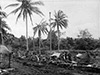 Australian Army December 15, 1944 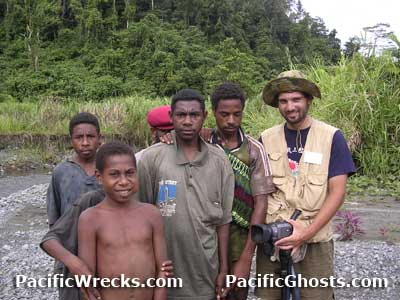 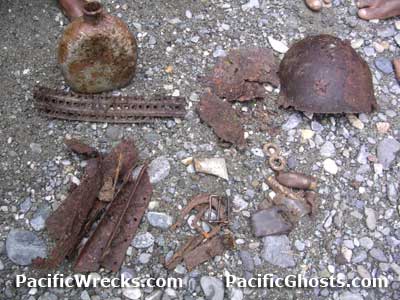 Justin Taylan 2005 |
Location Lat 3° 19' 60S Long 142° 55' 0E Suain is located on the north coast of New Guinea. To the east is the Swain River that crosses the coastal road and runs roughly north to south. Beyond to the east is But. Prewar and during the Pacific War in the Sepik District of the Territory of New Guinea. Today located in the Aitape-Lumi District of West Sepik Province in Papua New Guinea (PNG). Today, two villages are at this location, Suain 1 and Suain 2 (closer to the road). Prewar During the German administration era, Suain plantation was established at this location planted with coconut palms harvesting copra. A track was established between Babiang to Suain. Wartime History During 1943 occupied by the Japanese Army. In the middle to late 1944, attacked by Allied fighters and bombers. Before withdrawing from the area in late 1944, the Japanese cut down coconut palms to render the old German track useless for vehicle traffic. Allied missions against Suain (USAAF 5th AF, RAAF) June 21, 1944–September 6, 1944 In early December 1944, occupied by the Australian Army. At low tide, the compacted sand on the coast was used as an improvised road for jeeps connecting Suain Plantation to Babiang. On December 10, 1944 Australian Army Major-General J. E. S. Stevens (C. O. 6th Division) visited Suain plantation to have a conference with senior officers. By December 15, 1944 the 2/4th Infantry Battalion and Battalion Headquarters established a new camp site at Suain roughly 3,000 yards from the bank of the Danmap River. Other Australian units that operated at Suain included Australian New Guinea Administrative Unit (ANGAU), A Troop and the 2/10 Commando Squadron. From this location, soldiers patrolled the area westward. During early January 1945, the 2/2nd Field Company worked to clear coconut palms and other construction work to further develop the area. The unit used explosives to quickly knock down palm trees and at least one bulldozer to level ground. Suain Airfield Small emergency landing ground (ELG) at this location used in late 1944 and 1945. Justin Taylan visited Suain on August 5, 2005: "I visited Suain with the Japanese Government Ministry of Health Labor & Welfare (MHL&W) to locate war dead. Villagers had stories of Japanese infantry weapons still emplaced in the hills, and fighting positions dug in the area. There were some wartime relics in the village, including a Type 92 7.7mm heavy machine gun "Jukie" and 75mm artillery shell. With their help, we located the remains of several Japanese soldiers. These remains represented soldiers killed by air attacks or starvation, all had very minimal equipment. In September, the remains were recovered to Japan." References AWM "Discovery of cannibalism in Japanese hide-out" (AWM: ART25745) Contribute Information Do you have photos or additional information to add? Last Updated November 29, 2025 |
 Map Fallingrain Map Mapcarta  Photo Archive |
| Discussion Forum | Daily Updates | Reviews | Museums | Interviews & Oral Histories |
|