|  |
|
| |
|
| Missing In Action (MIA) | Prisoners Of War (POW) | Unexploded Ordnance (UXO) |
| Chronology | Locations | Aircraft | Ships | Submit Info | How You Can Help | Donate |
|
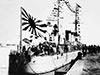 IJN February 1934 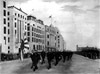 Matsumi Dec 8, 1941 |
Location Lat 31° 13′ 56″ N Long 121° 28′ 9″ E Shanghai 上海市 is located at an elevation of 39' / 12m above sea level in the eastern coast of China at the mouth of the Yangtze River. Also known as Shanghai City. Borders Shanghai Harbor and beyond the East China Sea. Today located in Shanghai Municipality in People's Republic of China (PRC). By the early 1930s, many Japanese companies and residents resided in Shanghai for business and trade in the Little Tokyo area of the International Settlement. On January 9, 1932 an editorial in the newspaper Min-kuo Jih-pao described the failed assassination attempt on Emperor Hirohito a s "unfortunate" and caused outrage among the Japanese community. On January 18, 1932 five Japanese Buddhist monks were attacked near Sanyou Factory by Chinese civilians and resulted in two seriously injured and one dead. Learning of the violence, Japanese vigilanties burned down the factory and killed two Chinese and a policeman was killed and others injured when they arrived to restore order. This created an upsurge in anti-Japanese sentiments with Chinese marching and calling for boycotts of Japanese goods. On January 22, 1932 Japanese authorities demanded that Shanghai's Mayor Wu disband anti-Japanese groups and cease boycotts. Meanwhile, Japanese companies demanded apologies and urged the Japanese Navy forces in Shanghai to ensure their safety and take action against the Chinese. Meanwhile, the Chinese 19th Route Army moved into the city. On January 23, 1932 during an emergency meeting Chinese General Cai Tingkai vowed to resist any Japanese invasion. Meanwhile, the Japanese deployed warships, seaplan and troops around Shanghai to protect Japanese citizen and their property. The Chinese agreed public condemnation and monetary compensation Postwar in 1946 during the International Military Tribunal for the Far East, Japanese Kwantung Army Major Tanaka Ryukichi in his memoirs claimed to have paid the Chinese mob to attack the monks to create a pretense for a military intervention in Shanghai. January 28 Incident / Shanghai Incident On January 28, 1932 in what became known as the "January 28 Incident" or the "Shanghai incident" began midnight Chinese troops in plainclothes infiltrated the Hongkou district where most Japanese lived and fired on Japanese Navy personnel leaving their headquarters. In response, the Japanese mobilized 3,000 sailors as the 19th Route Army defended fiercely until May 5, 1932 Ceasefire Agreement. Battle of Shanghai / Second Shinghai Incident During the Battle of Shanghai in 1937, the Japanese forces occupied the remaining Chinese administered parts of the city. After the Japanese occupation, foreigners continued to live in the "International Settlement" and "French Concession". In August 1937 the U.S. Embassy staff in Shanghai were embarked aboard USS Luzon (PR-7) and evacuated to Chongqing (Chungking). On November 27, 1941 U.S. Marines from 2d Battalion, 4th Marine Regiment under the command of Lieutenant Colonel Donald Curtis embarked aboard SS President Madison depart from Shanghai bound for the Philippines. On December 8, 1941 at the start of the Pacific War, Japanese forces occupied both the International Settlement and French Concession and imprisoned foreigner civilians and seized their property. USS Wake (PR-3) tied up at a pier in Shanghai is surrounded by Japanese forces and surrendered, the only U.S. ship to surrender to the Japanese in World War II. Starting in early July 1944 attacked by U.S. bombers until August 1945. Occupied by the Japanese until the official surrender of Japan on September 2, 1945. American missions against Shanghai July 5, 1944–August 6, 1945 Postwar On May 27, 1949, at the conclusion of the Shanghai Campaign the Communist People's Liberation Army (PLA) occupied Shanghai. Afterwards, most foreign firms moved their offices from Shanghai to Hong Kong, as part of an exodus of foreign investment. Today Shanghai was one of only three former Republic of China municipalities not merged into neighboring provinces. Today, Shanghai is the most populous city in China. Shanghai Jiangwan Airfield (Kiangwan, Kiang Wan, Jiangwan) Prewar airfield in northeast Shanghai used until 1994. Shanghai Golf Course Airfield Prewar airfield located at Shanghai Golf Far East Stadium (遠東運動場) Located in Shanghai Kunda Airfield Used by Japanese A1N2 and B1M3 carrier aircraft during the Shanghai Incident. Curtiss Hawk III Nose 寧波專號 Number 2503 Pilot Chang force landed August 16, 1937 salvaged by Japanese September 1937 Shanghai Pudong International Airport (Shanghai Airport) Built in 1997 at Pudong and opened October 1, 1999 as the primary international airport serving Shanghai. Mei Yuan (USS Tutuila PR-4/PG-44) Scuttled May 1949 to prevent capture by Communist Chinese forces Contribute Information Do you have photos or additional information to add? Last Updated February 7, 2026 |
 Map Fallingrain Map Mapcarta |
| Discussion Forum | Daily Updates | Reviews | Museums | Interviews & Oral Histories |
|