|  |
|
| |
|
| Missing In Action (MIA) | Prisoners Of War (POW) | Unexploded Ordnance (UXO) |
| Chronology | Locations | Aircraft | Ships | Submit Info | How You Can Help | Donate |
|
| USN S-class submarine 854 Tons (surfaced) 1,062 Tons (submerged) 219' 3" x 20' 8" x 15' 11" 1 x 4"/50 deck gun 4 x 21" torpedo tubes 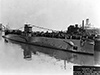 USN March 29, 1923 |
Ship History Built by Bethlehem Shipbuilding Corporation in San Francisco. Laid down December 10, 1918 as S-class submarine. Launched June 3, 1919 as USS S-36 sponsored by Miss Helen Russell. Commissioned April 4, 1923 in the U.S. Navy (USN). Afterwards underwent trials and operates off the west coast with a voyage in June 1923 to Alaska and in early 1924 maneuvers in the Caribbean Sea. In September 1925 departs the west coast bound for the Philippines. On November 4, 1925 arrives Cavite and joins the Pacific Fleet. Until the late 1930s, in the summer operates s off China and in the winter months returns to Cavite for overhaul and refit. In the later 1930s, patrols in the Philippines, South China Sea and Netherlands East Indies (NEI). During April 1940 departs for China on her final prewar patrol. In June 1940 returns to Cavite and remains in the Philippines. First War Patrol On December 3, 1941 at 1:00pm departs Cavite on her first war patrol and in the afternoon arrives off Cape Bolinao and observes U.S. river gunboats from China en route to Manila and remains on alert in the vicinity for the next week. On December 8, 1941 at the start of the Pacific War spots enemy planes and begins patrolling between Cape Bolinao across Lingayen Gulf to Fernando. On December 9, 1941 develops an air leak but continues her patrol. On December 12, 1941 the electrical system failed and the next day exhaust values leak. On December 14, 1941 instructed to report her position since none of her prior messages were received. On December 16, 1941 ordered back to Mariveles. On December 20, 1941 with worsening air leaks and taking on sea water arrives Mariveles and undergoes repairs and replenishment. Second War Patrol On December 30, 1941 departs Mariveles and patrols the Verde Island Passage between Luzon and Mindoro. On January 1, 1942 reconnoitered Batangas Bay then west and south of Verde Island. In the afternoon spots a Japanese ship oat Calapan on Mindoro and fires a torpedo and claims to sink the ship but no loss is confirmed. For another week, continues to patrol the Verde Island Passage. On January 8, 1942 her port engine air compressor fails and due to battery water consumption departs for the Netherlands East Indies (NEI). On January 10, 1942 her starboard engine air compressor begins malfunctioning. On January 12, 1942 operates in the Sulu Sea and the next day her port main motor failed but remains on patrol. On January 15, 1942 in the early morning in the shipping lanes between Makassar and Davao due to mechanical failures spotted by a Japanese destroyer and submerged and was depth charges that explode off both quarters causing damage, loss of power over bow dive planes and gyrocompass and blown fuses. At a depth of 150' her gyrocompass was restored and began turning to starboard at 1/3 speed keep the destroyer astern. At 6:30pm lost depth control and from a depth of 230' began to rise to the surface as the crew worked to vent and flood and stopped at a depth of 90' and her depth fluctuated between 100' to 200'. At 7:00am control was regained and the destroyer departed allowing the damaged submarine to clear the area and begin repairs. On January 16, 1942 in the morning spotted the coast of Celebes while battling engine problems and a fire. At 7:00pm surfaced and passed North Watcher Island at the northern end of the Makassar Strait. On January 17, 1942 ordered to Surabaya and both port and starboard shafts went out of commission as repairs continued. On January 18, 1942 repairs continue steaming southward in the Makassar Strait. Fate On January 20, 1942 at 4:04am ran aground on Taka Bakang Reef (Karang Takabakang Reef) at the southern end of Makassar Strait at roughly Lat 4°57'N, Long 118°31'E. The crew attempted to free the submarine as time passed, chlorine gas was generated by her flooded forward battery and the sea conditions changed. In desperation, the submarine made a plain language radio message requesting help. On January 21, 1942 in the morning launch Attla was sent from Makassar to her aid and two officers and 28 sailors were transfered aboard while commander Lt. John R. McKnight, Jr. and the rest of the crew remained aboard in a final attempt to save the submarine. At noon, Dutch cargo ship Siberote arrived and the remaining crew were transfered aboard. At 1:00pm the submarine was scuttled by flooding on Taka Bakang Reef (Karang Takabakang Reef) at the southern end of Makassar Strait. Fates of the Crew The crew aboard Siberote continued to Makassar and embarked the rest of the crew transfered off aboard launch Attla and the entire crew were transported aboard Siberote to Surabaya and were reassigned. Memorials One member of the crew, Chief Yeoman Chester Arthur Guynup who was left behind in the Philippines surrendered to the Japanese and became a Prisoner Of War (POW). On December 26, 1942 he died of acute colitis in a POW Camp in Osaka in Japan. Postwar, his remains were recovered and transported to the United States for permenant burial. On October 29, 1948 buried at Arlington National Cemetery at section 12, site 5438. References Naval History and Heritage Command (NHHC) - S-36 (SS-141) NavSource - S-35 (SS-141) On Eternal Patrol - The Loss of USS S-36 (SS-141) Arlington National Cemetery (ANC Explorer) - Chester Arthur Guynup (grave photos) FindAGrave - Chester Arthur Guynup (grave photos) Contribute
Information |
| Discussion Forum | Daily Updates | Reviews | Museums | Interviews & Oral Histories |
|