|  |
|
| |
|
| Missing In Action (MIA) | Prisoners Of War (POW) | Unexploded Ordnance (UXO) |
| Chronology | Locations | Aircraft | Ships | Submit Info | How You Can Help | Donate |
|
| USN V-5 Class Submarine Narwhal-class submarine 2,730 Tons (surfaced) 3,900 Tons (submerged) 349' / 33' 3 1/4" x 16' 11 1/4" 8 x 21" torpedo tubes with 24-26 torpedoes 2 x 6" deck gun 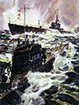 Beaumont 1941 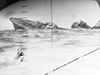 USN June 25, 1942 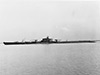 USN April 15, 1942 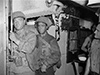 USN August 17, 1942 |
Sub History Built by Mare Island Navy Yard at Mare Island as V-6 but before construction began redesignated SC-2. Laid down May 10, 1927 as a V-5 class submarine. Launched March 15, 1930 sponsored by Miss Joan Keesling. Commissioned July 1, 1930 in the U.S. Navy (USN) with Lieutenant Commander Thomas J. Doyle Jr. in command. On February 19, 1931 renamed USS Nautilus and designated as a Narwhal-class Submarine. On July 1, 1931 designated SS-168. During the 1930s, the bow had "Nautilus" in block letters in white on the bow. During July 1941 entered Mare Island Navy Yard at Mare Island for modernization with updated radio equipment, external torpedo tubes (two bow and two stern firing) and a newer Winton diesel engines plus air conditioning. The modernization continued until the spring of 1942. On April 21, 1942 departs San Francisco and seven days later arrives at Pearl Harbor. First War Patrol On May 24, 1942 departs Pearl Harbor under the command of Lieutenant Commander William H. Brockman Jr. on her first war patrol bound for Midway Atoll to patrol against Japanese forces expected in the area. On June 4, 1942 at the start of the Battle of Midway at 7:55am while approaching the northern boundary of her patrol area, spotted masts on the horizon and was seen by Japanese planes that made a strafing attack forcing the submarine to crash dive to 100' then resumed observation spotting Battlecruiser Kirishima, Heavy Cruiser Nagara plus two other cruisers [sic, two destroyers] but was again bombed and the destroyers closed and made a depth charge attack but failed to cause any damage. Afterwards, surfaced to periscope depth and was surrounded by warships and fired her two bow torpedoes at Kirishima but one misfired and the other missed. When a destroyer was spotted heading towards the submarine, again crash dove to 150' then at 8:46am surfaced to periscope depth and at 9:00am raised her periscope and spotted an aircraft carrier and changed course to make an attack but the same destroyer Arashi chased and made another depth charge attack. By 9:55am, the submarine again surfaced and the sea was clear. Unknown to Nautilus, the destroyer Arashi chasing them had departed to rejoin the carrier and was spotted and tracked by SBD Dauntlesses from VB-6 and resulted in the U.S. spotting the Japanese task force. At 12:53pm a damaged aircraft carrier they identified as Soryu [sic likely Kaga] with two escorts were spotted and Nautilus moved into position to attack. At 1:59pm until 2:05pm launched four torpedoes at the damaged aircraft carrier but one failed to run, two ran erratically and the fourth impacted amidship but was a dud. Afterwards, dove to 300' as escorts made a depth charge attack. At 4:10pm surfaced to periscope depth and saw the carrier burning and abandoned. At 7:41pm resumed patrolling having fired five torpedoes and survived 42 depth charges but failed to cause any damage but regardless LtCdr Brockman earned the Navy Cross. On June 7, 1942 returned to Midway to replenish then resumed patrolling to the west. On June 20, 1942 patrolling off Honshu and two days later damaged a destroyer guarding the entrance to the Sagami Sea off Ōshima. On June 25, 1942 fires torpedoes with two hitting destroyer Yamakaze that broke into three pieces and quickly sank at roughly Lat 34° 34 N, Long 140° 26 E approximately 60 miles southeast of Yokosuka. The sinking destroyer is photographed through the periscope. On June 27, 1942 torpedoes and sinks Japanese auxiliary minesweeper Musashi Maru east of Nojimazaki, Japan at roughly 34°38'N, 140°08'E. On June 28, 1942 damaged by depth charges off central Honshu at roughly 34°34'N, 140°13'E. Afterwards, returns to Pearl Harbor. Between July 11, 1942 until August 7, 1942 under repair. Second War Patrol USS Argonaut (SM-1) and USS Nautilus (SS-168) were selected to transport Marine Raiders for the "Makin Raid" against Makin Island. On August 8, 1942 at Pearl Harbor embarks the 2nd Marine Raider Battalion "Marine Raiders" (Carlson Raiders) under Commanding Officer (C. O.) Lt. Col. Evans F. Carlson with Executive Officer Major James Roosevelt (son of U.S. President Franklin D. Roosevelt) and the Marines of Company A and Company B are aboard USS Argonaut (SM-1) and USS Nautilus (SS-168) for the "Makin Raid". The submarine departs on a three week special troop transport. On August 16, 1942 the submarines arrive off Makin Island and a photograph was taken of the island from the periscope of Nautilus. On August 17, 1942 at 3:30am the submarines surfaced and the Marines used rubber rafts with outboard engines to land on Makin. This was the first U.S. Marine Corps (USMC) operation launched from submarines. Ashore, the "Makin Raid" destroyed installations, disrupt the enemy and divert reinforcements to Guadalcanal. After killing 83 Japanese and destroying installations, ships and two flying boats by Sgt Buck Stidham and Sgt Walter Carroll using their Boys anti-tank rifle. By midnight on August 18, 1942, the surviving Marines returned to the submarines then departed for Pearl Harbor arriving August 26, 1942. During the "Makin Raid", the deck gun on Nautilus fired 12 shells at Ukiangong Point on the southern shore of Makin and fired 46 shells at two vessels at anchor in Makin Lagoon. At 10:39am a Japanese plane appears over Nautilus and dove and was attacked 11:30 and 12:55. At 7:00pm the Makin Raiders launched their boats to return to the submarines. Afterwards, the two submarines departed for Pearl Harbor arriving August 25, 1942 ending the war patrol. Third War Patrol On September 15, 1942 departs on her third war patrol off Japan from Kurile Island to Ryukyu Islands. Due to heavy seas, the submarine was unable to use her periscope use or fire torpedoes and mechanical issues for much of the patrol. During the patrol, Nautilus sank three ships and three sampans for a total 12,000 tons. On September 28, 1942 sunk Tamon Maru No. 6 a cargo vessel of 4,994 Tons. On October 1, 1942 sunk Tosei Maru a cargo vessel of 2,432 tons. On October 12, 1942 survived a heavy depth charge attack and two days later resulted in a slight oil leak in her wake. By October 19, 1942 leak enlarged considerably. On October 20, 1942 during air leaks were discovered and was leaving a trail of oil and bubbles. On October 24, 1942 sunk Kenun Maru a cargo vessel of 4,643 tons then departed for home. On October 31, 1942 arrived Midway for temporary repairs then onward to Hawaii. On November 5, 1942 arrives Pearl Harbor ending the war patrol. Fourth War Patrol On December 13, 1942 departs on her fourth war patrol. On December 31, 1942 rescues 26 refugees and three children from Teop Harbor on northern Bougainville. PARTIAL HISTORY On October 24, 1942 sunk Kenun Maru a cargo vessel of 4,643 Tons. PARTIAL HISTORY On January 9, 1943 spots a convoy off Kieta on Bougainville. During the night, Yoshinogawa Maru spots the submarine and made an unsuccessful attack. Early in the engagement, Yoshinogawa Maru depth charges USS Nautilus (SS-168), but the latter escapes unharmed. At 3:00am, the submarine fires a spread of torpedoes that hit Yoshinogawa Maru that cause damage and attempts to tow the ship fail and sinks. PARTIAL HISTORY On November 21, 1943 surfaces to land a U.S. Marine reconnaissance company from the 5th Amphibious Corps on the southeast of Abemama. PARTIAL HISTORY Thirteenth War Patrol On October 23, 1944 lands men and supplies on the east coast of Luzon. On October 25, 1944 again lands men and supplies on the east coast of Luzon. On October 27, 1944 another landing of men and supplies on the east coast of Luzon. On October 31, 1944 at 11:30am Nautilus was diverted to shell USS Darter (SS-227) ground on Bombay Shoal from point blank range and scores 55 hits with her 6" gun and reported: "It is doubtful that any equipment in Darter at 1130 this date would be of any value to Japan – except as scrap. Estimated draft of Darter – 4 feet." Afterwards, returns to Mios Woendi. Fourteenth War Patrol Nautilus departs on her fourteenth war patrol. On January 30, 1945 arrives Darwin ending her war patrol. Afterwards, departs bound for the United States. On May 25, 1945 arrives Philadelphia for inactivation. Fate On June 30, 1945 decommissioned with a bottle of champagne broken over the forward 6" deck gun. On July 25, 1945 struck from the Naval Register. On November 16, 1945 sold for scrap to North American Smelting Co. in Philadelphia, PA and broken up. Awards Nautilus earned the Presidential Unit Citation and 14 battle stars for her service during World War II. Nautilus was credited with a total of six ships: Yamakaze, Tamon Maru No. 6, Tosei Maru, Kenun Maru, Yoshinogawa Maru and America Maru) with a total tonnage of 21,149. References NARA "Destroyers, Shore Batteries & Deck Guns The Nautilus Escaped Them All" [USS Nautilus War History] NARA USS Nautilus - Report of First War Patrol Naval History and Heritage Command (NHHC) - Nautilus III (SS-168) NavSource - V-6 (SC-2) Nautilus (SS-168) Pig Boats - V-6/Nautilus plans 1943 NHHC Japanese Naval and Merchant Shipping Losses During World War II by All Causes pages 2 (Yamakaze), 33 (Tamon Maru No. 6, Tosei Maru), 37 (Yoshinogawa Maru), 123 (index), Appendix 26 (USS Nautilus) Contribute
Information |
 Photo Archive |
| Discussion Forum | Daily Updates | Reviews | Museums | Interviews & Oral Histories |
|