|  |
|
| |
|
| Missing In Action (MIA) | Prisoners Of War (POW) | Unexploded Ordnance (UXO) |
| Chronology | Locations | Aircraft | Ships | Submit Info | How You Can Help | Donate |
|
| USN Clemson-class destroyer Seaplane Tender Seaplane Tender, Destroyer 1,190 Tons 314' 5" x 30' 8" x 9' 3" 4 x 4"/50 guns 2 x 3"/25 guns 12 x 21" torpedo tubes 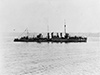 USN August 1929 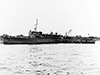 USN July 1943 |
Ship History Built by Norfolk Naval Shipyard in Portsmouth, Virginia. Laid down November 18, 1918 as a Clemson-class destroyer. Launched June 28, 1919 as USS Hulbert (DD-342) named for U.S. Marine Corps (USMC) Sergeant Major Henry L. Hulbert sponsored by Mrs. V. C. Hulbert, widow of Lieutenant Hulbert. Commissioned October 27, 1920 in the U.S. Navy (USN). Afterwards, departs Norfolk on a shake down cruise. Next, joins in maneuvers in the Atlantic Ocean until June 1921 then participates in ordnance tests on obsolete American and captured German warships and is based at Newport, Rhode Island. In early 1922, during maneuvers sustained bow damaged in an accidental collision in Guantanamo Bay. On May 17, 1922 at Brooklyn Navy Yard the damged bow was replaced with the bow of USS Graham (DD-192) that was being scrapped. On June 20, 1922 departs bound for China steaming via the Mediterranean and Ceylon. On August 26, 1922 arrives Chefoo in China and for the remainder of the year patrols China and the Philippines. On February 28, 1923 a furnace oil fire in the engine room killed six of her crew. During the 1920s protects U.S. interests in China and fleet exercises. In March 1927 and September 1928 evacuates American civilians and missionaries in China. On July 22, 1929 departs Yokohama across the Pacific bound for the United States. On August 17, 1929 arrives San Diego and for the remainder of the year operates off the coast of California as a plane guard for USS Langley (CV-1) and USS Saratoga (CV-3). During 1930 until 1934 participates in fleet exercises off the west coast and east coast of the United States. On April 23, 1930 enroute Guantanamo Bay to Santiago aboard were Lieutenant Chester W. Nimitz, Lieutenant G.V. Stewart, Admiral Frank B. Upham, Lieutenant Caldwell (V-2), Lieutenant Campbell (V-1). On August 14, 1934 arrives Philadelphia. On October 17, 1934 decommissioned and placed in reserve. On November 15, 1939 converted Seaplane Tender AVP-19. On August 2, 1940 at New York Navy Yard redesignated as Seaplane Tender, Destroyer designated AVD-6. Afterwards, departs via Guantanamo Bay and the Panama Canal bound for the west coast. On August 24, 1940 arrives San Diego and begins servicing seaplanes from Patrol Wing 1 (PatWing 1). On May 8, 1941 departs San Diego bound or Pearl Harbor and becomes the headquarters ship for the seaplane wing and continues to repair and servicing seaplanes. Wartime History On December 7, 1941 moored at Submarine Base, Pearl Harbor. Around 7:55am lookouts aboard spotted enemy planes and general quarters was sounded and soon afterwards the destroyer's anti-aircraft guns opened fire. Hulbert is believe to be the first warship to engage the first wave of Japanese planes attacking Pearl Harbor. At 7:58am claimed a torpedo plane shot down. At 8:20am shared credit for shooting a dive bomber and damaged several other planes. Afterwards, aided in rescue efforts then loaded ammunition and departs bound for Hilo. On December 9, 1941 arrives Hilo to setup an advance base for patrol bombers. On December 25, 1941 aids a seaplane at sea and performs repairs then towed it for 3 days when heavy seas prevented it from taking off. On December 30, 1941 in the afternoon, Japanese submarine I-1 arrives off Hilo and conducts a periscope reconnaissance and spots a small transport actually USS Hulbert (AVD-6). After sundown surfaces and fires ten high explosive shells at the ship and claims moderate damage and the ship returns fire plus coastal guns. In fact, only one shell hit the pier next to the ship and another starts a fire in the vicinity of Hilo Airfield. Afterwards, conducts supply runs to Palmyra then to Kodiak arriving June 6, 1942 to service seaplanes from VP-43 performing reconnaissance flights over the Aleutian Islands. On August 30, 1942 arrives off Seguam Island and lands a party of U.S. Marines to search for a Japanese radio station then departs. On August 31, 1943 arrives Atka to aid damaged USS Casco (AVP-12) and performs salvage and seaplane tending duty. On October 4, 1943 departs Atka bound for San Francisco to refit and repairs then proceeds to Seattle. On December 8, 1942 departs Seattle bound for Kodiak to service patrol bombers. During May 1943 moves to Amchitka. On May 11, 1943 serves as a communications ship during the U.S. landing on Attu. Afterwards, remains off Attu to provide tender services to seaplanes and PT Boats. On June 30, 1943 during a severe storm, ran aground in Massacre Bay off Alexai Point on Attu and sustained substantial hull damage. During July 1943 held uprights by LCT(5)-357 at the stern to hold the damaged vessel in place. After temporary repairs were made, departs for Dutch Harbor for more repairs then departs for Seattle arriving August 30, 1943 for a major repairs and overhaul. On December 1, 1943 reclassified as DD-342. On January 15, 1944 departs Seattle bound for San Diego and serves as an escort ship and for the remainder of the Pacific War. Postwar On September 30, 1945 departs San Diego escorting USS Ranger (CV-4) via the Panama Canal bound for Philadelphia arriving October 17, 1945. On November 2, 1945 decommissioned in Philadelphia. Fate On October 31, 1946 sold to Ship Shape, Inc. in Philadelphia for scrap and broken up. Awards For her World War II services, earned two battle star. References Naval History and Heritage Command (NHHC) - USS Hulbert (DD-342/AVD-6/APD-28) NavSource - USS Hulbert (DD-342, AVP-19, AVD-6) Contribute
Information |
 Photo Archive |
| Discussion Forum | Daily Updates | Reviews | Museums | Interviews & Oral Histories |
|