|  |
|
| |
|
| Missing In Action (MIA) | Prisoners Of War (POW) | Unexploded Ordnance (UXO) |
| Chronology | Locations | Aircraft | Ships | Submit Info | How You Can Help | Donate |
|
  USAAF 1945 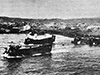 U.S. Army April 1, 1945 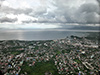 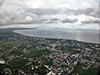 Justin Taylan Oct 5, 2026 |
Location Lat 13° 7' 60N Long 123° 43' 60E Legaspi (Legazpi) is the provincial capital of Albay Province on the Bicol Peninsula in the Bicol Region (Region V) of southeast Luzon in the Philippines. Today spelled Legazpi. Today known as Legazpi City, Officially the City of Legazpi. The eastern portion of Legaspi was known as Legazpi Port or San Roque. Borders Albay Gulf to the east, Daraga to the west and Linguion Hill (Ligñon Hill) to the north Rawis to the northeast. Beyond to the northwest is Mayon Volcano (Mount Mayon). Prewar Legazpi Port was an important shipping location. During late June 1938, four Japanese built Royal Thai Navy submarines: HTMS Phlai-chumphon, HTMS Matchanu, HTMS Wirun and HTMS Sinsamut transit via Legaspi on their delivery voyage bound for Siam (Thailand). Wartime History On December 8, 1941 at the start of the Pacific War, Legaspi was one of the first Japanese objectives in their occupation of the Philippines. At the start of the Pacific War, Albay Province was only defended by a Philippine Constabulary unit under the command of Major Francisco Sandico. The nearest U.S. Army forces of the South Luzon Force were 150 miles away. On December 12, 1941 at 1:45am, the Japanese Legaspi Attack Force (4th Surprise Attack Force) under Rear Admiral Kyuji Kubo from Palau arrives off Legaspi and begins landing without opposition. The warships include flagship light cruiser Nagara with destroyers from Destroyer Division 24 (DesDiv 24): Umikaze, Kawakaze, Yamakaze and Suzukaze, Destroyer Division 16 (DesDiv 16): Yukikaze, Tokitsukaze, Amatsukaze and Hatsukaze and Destroyer Division 15 (DesDiv 15) Natsushio, Oyashio, Kuroshio plus support vessels oiler Hayatomo, Patrol Boat No. 1 (Akikaze) and Patrol Boat No. 2 (Nadakaze), netlayer Toko Maru No. 1 Go, Patrol Boat No. 34 (PB-34), Patrol Boat No. 35 (PB-35) minelayer Aotaka and minesweepers W-7, W-19 and W-20. Air cover was provided by carrier planes from Ryūjō plus seaplanes from Chitose and Mizuho and Jintsu with a distant cover force under the command of Vice Admiral Ibō Takahashi including heavy cruisers Haguro, Myōkō,, Nachi. The invasion force was embarked aboard twelve transports including Kamogawa Maru, Shinanogawa Maru, Yamafuku Maru, Yasukawa Maru, Ikushima Maru, Myoko Maru, Haruna Maru, Shinryu Maru and Masumoto Maru. During the landing, at 4:00am what is believed to be an enemy submarine is detected and Aotaka and PB-34 are detached for a depth charge attack. Later that morning, PB-35 accidentally collides with Hayatomo causing slight damage to both vessels northeast of Legaspi Lighthouse. In the afternoon, two P-40s attack the Japanese landing plus several strafing missions in the subsequent days. In the early morning hours, the Japanese land at Legaspi without oppoistion. The invasion force is primarily the Japanese Army 16th Division (Kimura Detachment) under Major General Naoki Kimura with 2,500 soldiers including the 33rd Regiment and a battery from 22nd Field Artillery Regiment. Also, landed were 575 Japanese Navy Rikusentai (Marines) from No. 1 Kure Special Naval Landing Force (1st Kure SNLF). By 9:00am the Japanese have captured Legaspi including the the terminus of the Manila railroad and Legaspi Airfield. A few hours later they begin advancing to the northwest and southeast. American missions against Legaspi December 12, 1941–April 27, 1945 In late 1944, during planning for the liberation of the Philippines, U.S. Army Maj. Gen. Stephen J. Chamberlin, Assistant Chief of Staff G-3 at GHQ SWPA considered capturing Legaspi and Legaspi Airfield but the idea was soon dismissed due to logistical issues and was deemed unnecessary. By 1945, the Japanese garrison in Legaspi included roughly 1,000 Naval personnel from the 35th Naval Guard Unit with roughly half trained for combat that were under the command of the Naval Special Base Force on Cebu. The Japanese Army had roughly 600-700 soldiers under the direct control of Shimbu Group headquarters including a company of the 26th Independent Mixed Regiment and elements of various 4th Air Army ground service units that maintained Legaspi Airfield until it was neutralized by Allied bombing. To defend the Legaspi area, the Japanese established two defensive lines. The first line was to the south of Legaspi at Mount Bariw (Mount Bariway) extending the line north 4 miles along a low ridge (Estanza Hills) to barrio Busay, 3 miles northwest of Legaspi. The second line was further inland to the northwest in Quituinan Hills (Cituinan Hills). During November 1944 the Imperial Japanese Navy (IJN) 8th Shinyo Squadron was based at Legaspi with suicide motorboats to attack enemy vessels. By the middle of November 1944, U.S. heavy bombers and carrier planes were within range of Legaspi and began bombing the Legaspi area including the Legaspi Port area and Legaspi Airfield. On April 1, 1945 at 10:00am the Legaspi Attack Group (TG 78.4) under Captain Homer F. McGee including flagship USS Bailey (DD-492) plus USS Bancroft (DD-598), USS Day (DE-225), USS Holt (DE-706). The invasion force included flagship USS Lloyd (APD-63), USS Liddle (APD-60) and USS Alex Diachenko (APD-123) plus LCI Unit including flotilla flagship LCI(L)-618, flagship LCI(L)-435, LCI(L)-434, LCI(L)-436, LCI(L)-444, LCI(L)-445, LCI(L)-446, LCI(L)-619 and LCI(L)-814 plus LST Group 64 and close support by SC-698, SC-732, LCS-8 & LCS-48, LCI-780 and LCI(R)-338. The transports land the U.S. Army, 158th Regimental Combat Team (158th RCT) "Bushmasters" (reinforced) at Rawis near Legaspi and met only token resistance including a few artillery shells from a gun that was quickly silenced and liberates the port, town and Legaspi Airfield. By the late afternoon begins advancing inland towards Daraga. Aircraft support the invasion force for the rest of the month. Legaspi Airfield (Sanbon Field, Legazpi Airport) Built prewar in the middle 1930s, occupied by the Japanese December 12, 1941–April 1, 1945 References U.S. Army in World War II The Fall of the Philippines Chapter VI: The First Landings pages 98, 109-112 (Japanese invasion) Luzon The U.S. Army Campaigns of World War II pages 25-26 U.S. Army in World War II Triumph in the Philippines Chapter II The Plan for Invasion pages 21 U.S. Army in World War II Triumph in the Philippines Chapter XXIII Securing the Visayan Passages pages 439-444 Revenge of the Red Raiders: The Illustrated History of the 22nd Bombardment Group During World War II (2006) pages 314 (map), 345 (November 30, 1944), 347 (December 7, 1944), 349 (December 19 & 21, 1944), 362 (map), 364 (January 17, 1945), 389, 392 (April 1, 1945 landing), 578-579, 582-583, 585-586, 589-592, 613 (index Legaspi) Combined Fleet: Explosive Motorboats based in the Philippines 1944-1945 "Later, [November 1944] the 8th Shinyo Squadron is based at Legaspi, Luzon " Doomed From The Start American Pursuit Pilots in the Philippines 1941-1942 (1995) by William Bartsch pages pages 159 (December 12, 1941 strafing Legaspi and Legaspi Airfield), 166-167 (December 14, 1941 solo strafing Legaspi Airfield by Mahony), 186 (December 22, 1941 Obert recon Legaspi), 456 (Chapter 15, footnote 2), 462 (Chapter 23, footnote 4), 495 (index Legaspi) Contribute Information Do you have photos or additional information to add? Last Updated October 13, 2026 |
 Map Fallingrain Map Mapcarta |
| Discussion Forum | Daily Updates | Reviews | Museums | Interviews & Oral Histories |
|