|  |
|
| |
|
| Missing In Action (MIA) | Prisoners Of War (POW) | Unexploded Ordnance (UXO) |
| Chronology | Locations | Aircraft | Ships | Submit Info | How You Can Help | Donate |
|
| IJN Kagerō-class destroyer 2.490 Tons 388' 9" x 35' 5" x 12' 6" 6 x 12cm Type 3 guns 28 x 25mm AA 4 x 13.2mm AA 8 x 24" torpedo tubes 36 x depth charges 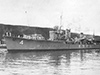 IJN March 31, 1941 |
Ship History Built by Uraga Dock Company at Uraga. Laid down May 23, 1939 as a Kagerō-class destroyer. Launched June 18, 1940 as Hagikaze 萩風 meaning "Clover Wind" in Japanese. Commissioned March 31, 1941 in the Imperial Japanese Navy (IJN) under the command of Commander Yoshio Inoue in Destroyer Division 4 (DesDiv 4) with Arashi, Nowaki and Maikaze. Wartime History On November 29, 1941 departs the Tsushima Strait with DesDiv 4 bound for Mako (Pescadores). On December 4, 1941 DesDiv 4 departs Mako (Pescadores) escorting the Southern Force Main Body as distant cover at the start of the Pacific War and escorts convoys bound for Malaya. On January 14, 1942 escorts the Southern Force Main Body from Mako bound for Palau and as distant cover for the invasion of the Netherlands East Indies (NEI). On February 18, 1942 escorts main body from Palau to Staring Bay. On February 25, 1942 departs Staring Bay escorting the carrier force bound Java. On March 11, 1942 returns to Staring Bay. On March 27, 192 departs Staring Bay escorting the supply group supporting the carrier force for raids in the Indian Ocean. On April 14, 1942 departs the Indian Ocean bound for Japan and four days later escorts Shokaku and Zuikaku to Mako. On April 22, 1942 arrives Yokosuka and docked for repairs. On May 5, 1942 Commander Juichi Iwagami takes command. Assigned to Operation MI as part of the destroyer escort for the First Mobile Force, Carrier Strike Force. On June 4, 1942 during the Battle of Midway when Kaga was damaged, at 1:35pm the Emperor's picture was transfered to Hagikaze. Between 2:00pm to 3:00pm rescues survivors of Kaga with Maikaze. At 7:25pm fires two torpedoes to scuttle Kaga that sinks stern first at roughly Lat 30°20′N Long 179°17′W. On June 5, 1942 at 5:20am Japanese destroyers Arashio, Hagikaze, Maikaze and Nowaki fired four torpedoes that scored two or three hits to scuttle Akagi causing the damaged carrier to sink stern first at roughly Lat 30° 30' N, Long 178° 40' W. On June 9, 1942 DesDiv 4 escorts Zuihō then the fleet patrolling from Ominato southwest of the Aleutian Islands. On July 14, 1942 DesDiv 4 is reassigned to DesRon 10, Third Fleet. On July 30, 1942 departs Saeki escorting Boston Maru and Daifuku Maru bound for Saipan arriving a week later. On August 6, 1942 at Saipan embarks the Ichiki Detachment then departs for Truk. On August 16, 1942 embarks soldiers from the Japanese Army, 28th Infantry Regiment "Ichiki Force" and at 7:00am departs Truk as part of a Transport Unit under including Arashi, Kagero, Tanikaze and Hamakaze bound for Guadalcanal. On August 18, 1942 at night the destroyers arrive Taivu Point on eastern Guadalcanal and begin unloading without opposition. On August 19, 1942 by 1:00am the unloading is complete and at 6:30am Hagikaze, Kagero and Arashi begin a shore bombardment of Tulagi. At dawn, bombed by B-17E "Fiji Foo" 41-9217 piloted by Major James Edmondson (C.O.) 431st BS from 5,000' off Tulagi and reports two hits and two near misses on a "cruiser" [sic destroyer Hagikaze] and claims the warship as sunk. In fact, a single 500 pound bomb hit Hagikaze on the no. 3 turret off Tulagi and the explosion destroys the turret, floods the magazine and damages the rudder and propeller shaft and results in 33 dead and 13 wounded. Damaged, Hagikaze can only make 6 knots and withdraws escorted by Arashi bound for Truk. On August 24, 1942 arrives Truk and begins emergency repairs. On September 8, 1942 placed under the command of Lieutenant Commander Kenji Hatano. On October 1, 1942 departs Truk bound for Yokosuka but on approach breaksdown and was towed by Yamagumo into port then docked for repairs for the remainder of the year. On February 28, 1943 departs Yokosuka with Onami bound for Truk and arrives five days later. On March 8, 1943 departs Truk with Yugure escorting Chuyo back to Yokosuka arriving five days later. On April 1, 1943 departs Kure escorting Kongo and Haruna bound for Truk arriving five days later. On April 13, 1943 departs Truk escorting Chokai to Rabaul and returns a week later. On April 25, 1943 departs Truk escorting a convoy to Rabaul arriving three days later. On April 29, 1943 departs Rabaul to Shortland arriving the next day then participates in a transport run bound for Kolombangara and returns. On May 4, 1943 conducts another transport run to Kolombangara. On May 8, 1943 while enroute from Shortland to Buka diverted to scuttle Oyashio and Kagero but arrives too late. On May 9, 1943 departs Shortland to Rabaul arriving the next day. On May 15, 1943 departs Rabaul escorting Nisshin to Truk arriving two days later. On June 5, 1943 departs Truk with Ushio escorting Unyo and Chuyo bound for Yokosuka arriving four days later. On June 16, 1943 placed under the command of Lieutenant Commander Masahiro Makoshi. On July 10, 1943 departs Kure escorted by Araski an Hagikaze bound for Truk arriving five days later. On July 19, 1943 departs Truk escorting Nisshin, Mogami, Oyodo and Agano bound for Rabaul arriving two days later. On July 21, 1943 departs Rabaul escorts Nisshin bound for Shortland arriving the next day and becomes the flagship of Comdesron 10. On July 22, 1943 when Nisshin was sunk by U.S. planes, helps rescues survivors southeast of Bougainville. On July 27, 1943 departs on a transport run to Rekata Bay. On August 1, 1943 conducts a transport run to Kolombangara. Sinking History On August 6, 1943 departs with soldiers and supplies embarked on a "Tokyo Express" troop transport run with Hagikaze (flagship), Arashi and Shigure bound for Vila on Kolombangara. During the Battle of Vella Gulf hit by gunfire and torpedoes from destroyers USS Dunlap (DD-384), USS Craven (DD-382) and USS Maury (DD-401) between Kolombangara and Vella Lavella and sunk with 178 killed at roughly Lat 7° 50' S, Long 156° 55' E. On October 15, 1943 removed from the Navy list. Fates of the Crew An unknown number of crew survived and were rescued. References Naval History and Heritage Command (NHHC) Japanese Story of the Battle of Midway pages 9, 29, 31 Naval History and Heritage Command (NHHC) Japanese Naval and Merchant Shipping Losses pages 7 (August 6, 1943), 104 (index Hagikaze) Naval History and Heritage Command (NHHC) Interrogations of Japanese Officials - Vols. I & II page 472 (August 6, 1943) Guadalcanal Diary (1943) pages 116-117, 122-123 (Page 122-123) "The B-17 had passed on toward Tulagi, and now we saw her turning. Through glasses, one could make out the masts of a ship, projecting above the horizon, directly below the bomber. We knew the aircraft had dropped bombs, for we saw a mushroom of dark-brown smoke rising from a point just aft of the rear mast, and a steady torrent of smoke followed." A Battle History of the Imperial Japanese Navy, 1941-1945 (1978) pages 388 (index Hagikaze) 68, 111, 139, 195 (August 19, 1942 bombing near Shortlands [sic Tulagi] by two B-17s), 156 (Midway), 278 (Battle of Vella Gulf), 345 (Appendix A: Hagikaze) Grey Geese Calling (1981) page 250 Guadalcanal: Starvation Island (1987) pages 142-143 Guadalcanal: The Definitive Account of the Landmark Battle (1992) pages 147 (August 19, 1942), 678 (Notes , page 147), 765, 791 (index Hagikaze) Fortress Against The Sun (2001) pages 231-232 Combined Fleet IJN Hagikaze: Tabular Record of Movement Contribute
Information |
 Map Nov 30, 1942 |
| Discussion Forum | Daily Updates | Reviews | Museums | Interviews & Oral Histories |
|