|  |
|
| |
|
| Missing In Action (MIA) | Prisoners Of War (POW) | Unexploded Ordnance (UXO) |
| Chronology | Locations | Aircraft | Ships | Submit Info | How You Can Help | Donate |
|
 USN CAC-22 December 14, 1944   USAAF 1945 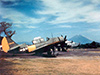 USAAF April 1945 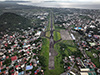 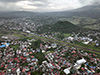 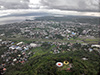 Justin Taylan Oct 5, 2026 |
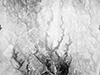
Location Lat 13° 10' 0" N Long 123° 44' 0" E Legaspi Airfield (Legazpi Airfield) is located in barrio Cruzada, one mile north of Legaspi (Legazpi) on the Bicol Peninsula in the Bicol Region (Region V) of southern Luzon in the Philippines. To the north is the east-west provincial road (Daraga-Legazpi Diversion Road), Leprosarium (Leper Colony), Linguion Hill (Ligñon Hill) with an elevation of 555' and the Yawa River and beyond Mount Mayon (Mayon Volcano). Prewar and into the Pacific War known as Sanborn Field. Today known as Legazpi Airport. Construction During the middle of the 1930s, a single runway surfaced with grass was built at this location surrounded by rice fields and operated by the Philippine government as a civil airfield. Named Sanborn Field in honor of pilot 2nd Lt. Elwell A. Sanborn killed June 10, 1932 in a crash of a Boeing P-12 at Fort Stotsenberg. By 1941, the runway measured 2,700' x 330' (other sources state 2,790' x 165'). Wartime History On December 12, 1941 in the early morning, the Legaspi Attack Force lands the Japanese Army Kimura Detachment unopposed. The Japanese occupy Legaspi without opposition and by 9:00am capture Legaspi Airfield. That afternoon, P-40E pilot Bob Hanson strafes Legaspi Airfield. Reportedly, casualties include three killed and three wounded. On December 14, 1941 in the early afternoon, the first Japanese planes landed at Legaspi Airfield including nine A6M2 Zeros from Tainan Kōkūtai (Tainan Air Group) and six G4M1 Bettys. At 4:30pm a single P-40E Warhawk piloted 1st Lt. Grattan "Grant" Mahony dove from 13,000' and strafed Legaspi Airfield targeting a radio shake and was fired on by anti-aircraft guns then turned away and made a second strafing run at parked bombers and fighters when intercepted by Zeros that dove down on him but he managed to escape by flying towards Mount Mayon causing the Zeros to split into two groups and circled the volcano in opposite directions as he managed to escape and fly back to Nichols Field. Afterward, the Japanese reported that two Zeros an five Bettys were hit and damage and did not acknowledge the four Zero interception of the lone attacker. Two days later, they reported four of the nine Zeros were inoperative. On December 19, 1941 four A6M2 Zeros from Tainan Kōkūtai at Legaspi took off on a mission against Del Monte Airfield on Mindanao and strafe parked bombers claiming two B-17s and three B-18s destroyed. This air raid prompts the remaining bombers to evacuate to Darwin. The Japanese expanded the runway to 3,280' x 165' for military aircraft and added additional taxiways and revetments for parked planes. Anti-aircraft guns were emplaced on Linguion Hill and the vicinity. During the Japanese occupation, Legaspi Airfield was used by Imperial Japanese Navy (IJN) and Japanese Army Air Force (JAAF) fighters, bombers and transports as a forward base and as transit point to other airfields. During 1944, Ki-43 Oscars from 33rd Hiko Sentai (33rd Flying Regiment) were based at Legaspi. Elements of various 4th Air Army ground service units were tasked with maintaining the airfield until it was neutralized by Allied bombing. Japanese units based at Legaspi Tainan Kokutai (A6M2 Zero detachment) Tainan arrives December 14, 1941–January 16, 1942 departs Tarakan 33rd Hiko Sentai (Ki-43 Oscar) Fabrica arrives November 1944–December 1945 departs Palembang I American missions against Legaspi Airfield December 12, 1941–April 27, 1945 Starting in the middle of November 1944, U.S. Army Air Force (USAAF) bombers resumed strikes against Legaspi plus air strikes by U.S. Navy (USN) carrier planes to neutralize the runway and destroy parked planes. Meanwhile, the Japanese dispersed planes around Lingion Hill excavating the hillside and camouflaging parked planes. American air attacks continued until April 1945. On April 1, 1945 the Legaspi Attack Group (TG 78.4) lands the U.S. Army 158th Regimental Combat Team (158th RCT) "Bushmasters" liberates Legaspi meeting only token resistance quickly liberates the port, Legaspi town and Legaspi Airfield. Afterwards, Legaspi Airfield was repaired and became operational on April 7, 1945. Sometime in April 1945, a color photograph of parked planes shows A-25 Shrike 42-80171 and an unpainted B-25 Mitchell with a greenhouse nose. At Legaspi Airfield, a team from Allied Technical Intelligence Unit (ATIU) noted the wreckage of 42 Japanese planes including two A6M2 Zeros, twelve A6M5 Zeros, five Ki-43-II Oscars, five B6N2 Jills, four G4M2 Bettys, three D4Y3 Judys, three N1K2-J Georges, two Ki-61 Tony, one D3A Val, one P1Y1 Francis, one G3M Nell, one DC-2 Tess and two Ki-45 Nicks. Today Legazpi Airport is classified as a small airport that served the Bicol Region. The single runway is oriented 24/06 measures 7,480' x 118' surfaced with asphalt. Airport codes IATA: LGP – ICAO: RPLP. Designated as a Class 1 principal domestic airport by the Civil Aviation Authority of the Philippines. On February 21, 1981 a Philppine Airlines Boeing 727-200 with "Viva il Papa!" (Italian: Long live the Pope!) landed with Pope John Paul II for his visit to Legazpi as part of a six day visit to the Philippines. After landing at Legazpi Airport, he rode in a motorcade through streets lined with thousands of Bicolano devotees and held mass at eñaranda Park in front of the St. Gregory the Great Cathedral (Albay Cathedral) in a service dedicated specifically to farmers and rural workers. On October 7, 2021 the last flight took off and the airport closed the same day, replaced by the newly built Bicol Airport further to the southwest. Since closure, the former airfield area is planned to be developed into a business district. Since closure, the runway remains under the control of the Civil Aviation Authority (CAA) with portions of the former airport used by the Philippine Army and Philippine Air Force (PAF) as a base for Tactical Operations Group 5 (TOG5) on the north side of the runway across from the former terminal. F6F-5 Hellcat 58607 Pilot Ens George B. Whitehouse crashed December 14, 1944 References FindAGrave - Elwell A Sanborn (grave photo) ATIU Intelligence Summary No. 281 "Planes Recovered on Airfields" July 21, 1945 page 27 via Tony Feredo "Legaspi A/D, Luzon: Zeke 21 - 2, Zeke 52 - 12, Oscar 2 - 5, Jill 12 - 5, Betty 22 - 4, Judy 33 - 3, George 11 - 3, Tony - 2, Val - 1, Francis - 1, Nell - 1, Tess - 1, Nick - 2" LegazpiAirport.net official website removed as of 2021 Doomed From The Start American Pursuit Pilots in the Philippines 1941-1942 (1995) by William Bartsch pages pages 159 (December 12, 1941 strafing Legaspi and Legaspi Airfield), 166-167 (December 14, 1941 solo strafing Legaspi Airfield by Mahony), 186 (December 22, 1941 Obert recon Legaspi), 495 (index Legaspi) Revenge of the Red Raiders: The Illustrated History of the 22nd Bombardment Group During World War II (2006) pages 314 (map), 345 (November 30, 1944), 347 (December 7, 1944), 349 (December 19 & 21, 1944), 362 (map), 364 (January 17, 1945), 389, 392 (April 1, 1945 landing), 578-579, 582-583, 585-586, 589-592, 613 (index Legaspi) Thanks to Tony Feredo for additional information Contribute
Information Last Updated
|
 Map Fallingrain Map Mapcarta  View in Google Earth  Photo Archive |
| Discussion Forum | Daily Updates | Reviews | Museums | Interviews & Oral Histories |
|